
Mochi donuts bring together the chewy texture of Japanese mochi and the familiar shape of American donuts. These treats have a crispy outside and a soft, dense inside that makes them different from regular donuts.
The dough uses ingredients like rice flour, milk, and eggs to create that special bounce. Making mochi donuts at home is easier than you might think, and you can customize them with many different flavors and toppings.
You can fry them for the traditional crispy texture or bake them if you want to use less oil. The recipes work well for beginners who want to try making a new type of dessert without complicated steps.
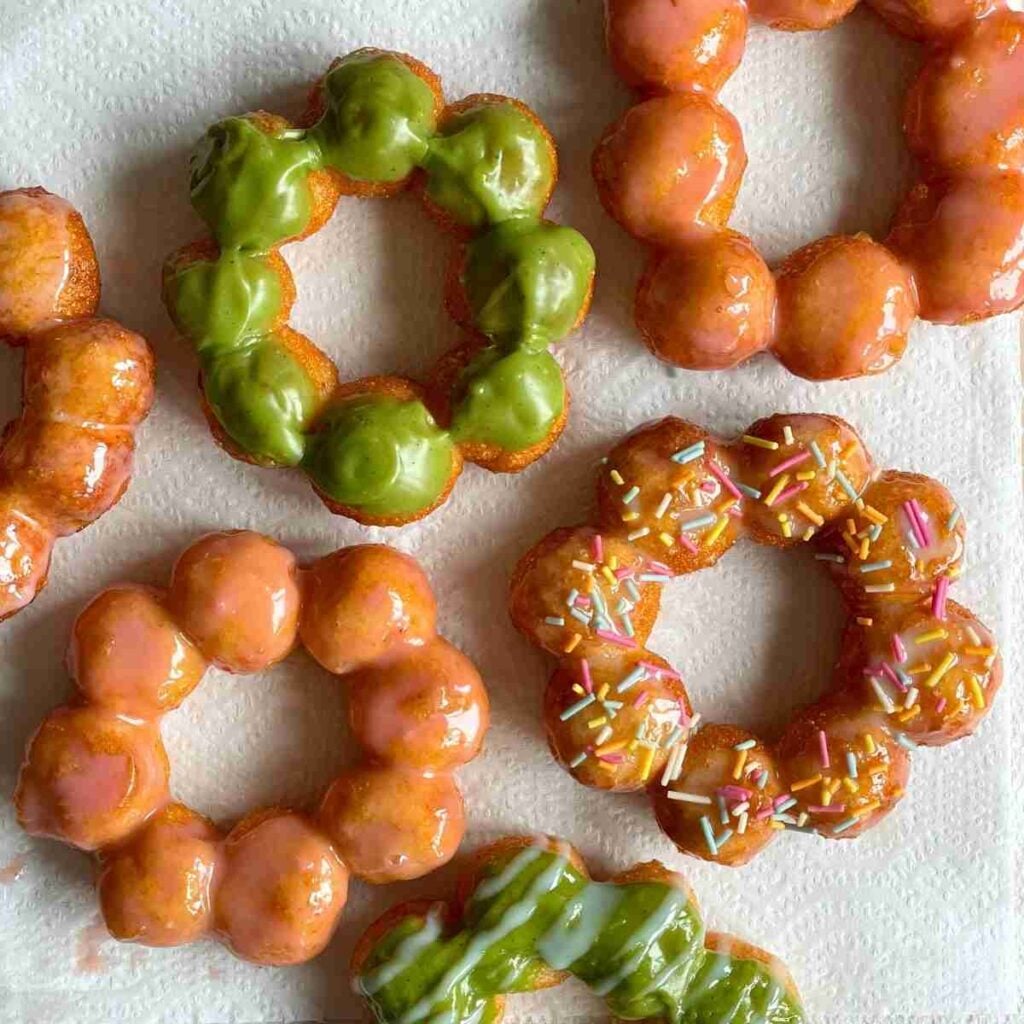
1. Classic Pon de Ring Mochi Donuts
The Pon de Ring is the original mochi donut that started it all. This Japanese treat features eight connected dough balls arranged in a circle, creating its famous bubble-ring shape.
You’ll love the crispy outside and chewy inside texture. The basic recipe uses tapioca starch and rice flour to get that special mochi texture.
A simple sugar glaze finishes these donuts. They taste best when fresh and still warm from frying.
You can make these at home without special equipment or hard-to-find ingredients.

2. Matcha Glazed Mochi Donuts
Matcha glazed mochi donuts blend the chewy texture of glutinous rice flour with the earthy taste of Japanese green tea powder. You’ll need basic ingredients like glutinous rice flour, sugar, matcha powder, and baking powder to make the dough.
The glaze requires sifted matcha powder mixed with powdered sugar and liquid to avoid clumps. After baking or frying your donuts, let them cool for about 20 minutes before dipping them in the glaze.
The glaze takes about 20 minutes to dry completely on your donuts.

3. Strawberry Powdered Mochi Donuts
Strawberry powder gives these mochi donuts a natural fruit flavor without adding extra moisture to your dough. Use freeze-dried strawberry powder for the best results.
Mix 2 tablespoons of strawberry powder directly into your dry ingredients before adding wet ingredients. This creates an even pink color throughout your donuts.
After frying your mochi donuts, let them cool for 2 minutes. Then dust them generously with powdered sugar mixed with a teaspoon of strawberry powder for extra flavor.

4. Sesame Seed Topped Mochi Donuts
Black sesame seeds add a toasted, nutty flavor to mochi donuts. You can mix black sesame directly into the dough or sprinkle it on top as a garnish.
These donuts work well with matcha or ube glazes. The earthy taste of black sesame pairs nicely with sweet glazes.
You’ll need sweet rice flour to make authentic mochi donuts. This ingredient creates the chewy, stretchy texture that makes these donuts different from regular ones.
Toast your sesame seeds before using them to bring out more flavor and crunch.

5. Chocolate Glaze Mochi Donuts
Chocolate glaze mochi donuts combine chewy texture with rich chocolate flavor. You can bake these donuts using mochiko flour, eggs, and butter as your base ingredients.
The chocolate glaze is simple to make. Mix powdered sugar with cocoa powder, butter, and a splash of milk or water until smooth.
Dip each cooled donut into the glaze and let the excess drip off. These donuts work well when baked in a donut pan at 350°F for about 20 minutes.
They’re naturally gluten-free and have a crispy exterior with a soft, chewy center.

6. Lemon Sugar Mochi Donuts
Lemon sugar mochi donuts bring a bright citrus flavor to the classic chewy texture. Mix lemon zest directly into your mochiko flour batter for a fresh taste in every bite.
The key is using real lemon zest, not just extract. This gives you natural lemon flavor throughout the donut.
After frying or baking, roll the warm donuts in a mixture of granulated sugar and more lemon zest. These donuts work great with coconut milk in the batter.
The combination creates a tropical twist that balances the tartness.

7. Maple Glazed Mochi Donuts
Maple glaze brings a sweet, warm flavor to mochi donuts that works well any time of year. The glaze is simple to make with maple syrup, powdered sugar, and a bit of milk or butter.
You can make these donuts vegan or gluten-free by choosing the right ingredients. Sweet rice flour creates the chewy texture you want.
The maple topping pairs nicely with the crispy outside and dense center of the donut. These work well for breakfast or as an afternoon snack.

8. Black Sesame Mochi Donuts
Black sesame mochi donuts bring a nutty, toasted flavor to the chewy mochi texture you love. The black sesame adds an earthy taste that works well with sweet glazes.
You can make these donuts baked or fried. Both methods give you that stretchy, bouncy texture mochi is known for.
The recipe is simple and uses basic ingredients like glutinous rice flour and black sesame paste. Top them with toasted sesame seeds for extra crunch.

9. Cinnamon Sugar Mochi Donuts
Cinnamon sugar mochi donuts offer a classic flavor combination that works perfectly with the chewy texture of rice flour. You can make these treats in about 30 minutes using either a baking or frying method.
The simple coating requires just cinnamon and sugar mixed together. After cooking your donuts, brush them with melted butter and roll them in the cinnamon sugar mixture while still warm.
These donuts use mochiko or glutinous rice flour as the base, which makes them naturally gluten-free. The result is a crispy exterior with a soft, chewy center.

10. Baked Mochi Donuts
Baked mochi donuts offer a simpler way to make these treats at home. You don’t need a deep fryer or hot oil.
Just mix glutinous rice flour with milk, eggs, and sugar, then bake them in your oven. These donuts still have that chewy texture inside with a slightly crisp outside.
You can use Mochiko or sweet rice flour for the best results. The plain donuts work well with different glazes.
Try matcha, chocolate, or strawberry to add flavor and color.
What Makes Mochi Donuts Unique?
Mochi donuts stand out because they use glutinous rice flour instead of regular wheat flour, which creates a chewy texture you won’t find in standard donuts. The special flour also changes how these donuts taste and feel when you bite into them.
Texture and Flavor Profile
The most noticeable difference is the chewy, almost bouncy texture that comes from using mochiko flour. When you bite into a mochi donut, you’ll first taste the crispy golden exterior before reaching the dense, chewy center.
This texture is completely different from cake donuts or yeast donuts. Regular donuts are soft and airy, but mochi donuts are thick and satisfying.
The flavor is slightly sweet and mild compared to traditional donuts. This makes mochi donuts perfect for adding different glazes and toppings.
You can taste the toppings more clearly because the donut base doesn’t overpower them.
Key Ingredients and Substitutions
Mochiko flour is the main ingredient that makes these donuts special. This glutinous rice flour creates the signature chewy texture.
You can find it at Asian grocery stores or online. Here are the basic ingredients you need:
- Mochiko flour (glutinous rice flour)
- Eggs
- Butter or oil
- Sugar
- Milk
- Baking powder
Many mochi donuts are naturally gluten-free because they use rice flour instead of wheat flour. If you need a dairy-free version, swap regular milk for plant-based milk like almond or oat milk.
You can also use coconut oil instead of butter. Don’t try to substitute mochiko flour with regular rice flour or all-purpose flour.
These won’t give you the right chewy texture that makes mochi donuts special.
Techniques for Perfect Mochi Donuts
Getting the texture right means controlling your dough consistency and oil temperature. Creative glazes transform simple donuts into bakery-quality treats.
Shaping and Frying Tips
Proper shaping and temperature control are key to authentic mochi donuts. Use a piping bag or a ziplock bag with the corner cut off to shape your donuts.
Shaping Process:
- Fill your piping bag with the batter, being careful not to overfill.
- Pipe the batter into connected circles to form the signature bubble ring shape.
- Let the shaped donuts rest for 10-15 minutes before frying.
This resting period helps the batter set slightly, which makes handling easier.
Frying Temperature: Keep your oil between 325°F and 350°F. Oil that’s too hot will brown the outside before the inside cooks through.
Oil that’s too cold will make your donuts absorb excess grease and turn out soggy. Fry each donut for about 2-3 minutes per side until golden brown.
You should see small bubbles forming around the edges when they’re ready to flip.
Glazing Ideas and Decoration Techniques
Apply glazes while your donuts are still slightly warm for the best coating. The residual heat helps the glaze set smoothly and creates a shiny finish.
Simple Glaze Options:
- Powdered Sugar Glaze: Mix 2 cups powdered sugar with 3-4 tablespoons milk.
- Chocolate: Melt chocolate chips with a splash of cream for smooth coverage.
- Matcha: Add 1-2 teaspoons matcha powder to your base glaze.
Dip each donut face-down into the glaze, then lift and twist gently to remove excess. Place on a wire rack to let the glaze set for 15-20 minutes.
For decorative touches, sprinkle toppings like crushed freeze-dried strawberries, chopped nuts, or colorful sprinkles immediately after glazing. The wet glaze acts as glue to hold everything in place.
Frequently Asked Questions
Making mochi donuts at home raises common questions about ingredients, techniques, and adaptations.
What are the essential ingredients for making mochi donuts?
You need six main ingredients to make mochi donuts. The basic recipe includes glutinous rice flour, whole milk, an egg, sugar, baking powder, and neutral oil for frying.
Glutinous rice flour creates the signature chewy texture that sets mochi donuts apart from regular donuts. The milk and egg work together to give the donuts their soft interior.
How do you create a baked version of mochi donuts?
Baked mochi donuts require a special donut pan designed for baking. Prepare the same basic batter but bake it at around 350°F instead of frying in oil.
The baking process takes about 15-20 minutes until the donuts turn golden brown. Baked versions have less oil but still maintain a chewy texture.
Grease your pan well to prevent sticking.
Can you make mochi donuts without glutinous rice flour?
Making authentic mochi donuts without glutinous rice flour is difficult. The glutinous rice flour provides the essential chewy, bouncy texture that defines mochi donuts.
Regular all-purpose flour will not create the same results. If you must substitute, try a mix of rice flour and tapioca starch, but the texture will differ from traditional mochi donuts.
What is the best way to achieve the perfect texture in mochi donuts?
The perfect mochi donut has a crispy golden exterior and a soft, chewy interior. Achieve this by frying at the right temperature, typically between 350-375°F.
Fry the donuts for about 2-3 minutes per side until they turn golden brown. Do not overmix the batter, as this can make the donuts tough instead of bouncy.
Let the batter rest for a few minutes before frying to help develop the proper texture.
Are there any healthy adaptations for traditional mochi donut recipes?
You can reduce calories by baking instead of frying your mochi donuts. Air frying is another option that cuts down on oil while still creating crispy edges.
Traditional fried mochi donuts contain 150-200 calories each, while larger versions can reach 300-400 calories. Using less sugar in the glaze or opting for lighter toppings like powdered sugar instead of heavy chocolate ganache also reduces calories.
You can replace some of the whole milk with lower-fat alternatives.
How can you create mochi donut holes at home?
Mochi donut holes follow the same recipe as full-sized mochi donuts.
Pipe or scoop smaller portions of batter into the oil.
Fry the donut holes for less time than regular donuts, about 1-2 minutes per side.
The smaller size makes them cook faster and creates more crispy surface area.
Coat them in cinnamon sugar, matcha powder, or your preferred topping.