
German breakfast culture offers a satisfying mix of both simple and filling options that can change how you start your day. The morning meal holds real importance in Germany, where people take time to enjoy their food rather than rush through it.
You will find that German breakfasts include everything from fresh bread and cheese to warm egg dishes and sweet spreads. German breakfast foods combine bread-based items, protein options, and both sweet and savory choices to create a balanced morning meal.
The approach focuses on quality ingredients and straightforward preparation methods. You can adapt these foods to match your preferences, whether you want something light or need a hearty plate to fuel your morning.

1. Brötchen with Cold Cuts and Cheese
Brötchen are small bread rolls with a crispy crust and soft inside. They form the base of a traditional German breakfast.
Slice these rolls in half and add butter first. Then layer on cold cuts like salami, ham, or Leberwurst.
Popular cheese choices include Gouda, Emmental, or cream cheese. Germans find these rolls at bakeries every morning.
You can make simple open-faced sandwiches or close them for a heartier meal.

2. German Apple Pancakes (Apfelpfannkuchen)
German apple pancakes are thinner than American pancakes but thicker than French crêpes. Make them by mixing sliced apples into a simple batter and cooking them in a pan or baking them in the oven.
The apples become soft and sweet while the batter turns golden and fluffy. Many Germans sprinkle cinnamon sugar on top before serving.
You need just a few basic ingredients like eggs, flour, milk, and fresh apples. The entire recipe takes less than 30 minutes to prepare.

3. Farmer’s Breakfast (Bauernfrühstück)
Bauernfrühstück is a hearty one-pan German breakfast that combines potatoes, eggs, and bacon or ham. The name means “farmer’s breakfast” in German.
Crispy fried potatoes mix with scrambled eggs and meat in this filling dish. Many recipes include onions, and you can add bell peppers or cheese if you like.
This meal cooks in less than 30 minutes. The dish started as a way to use leftover potatoes.
Today, it remains popular in German households for its simple ingredients and satisfying flavors.
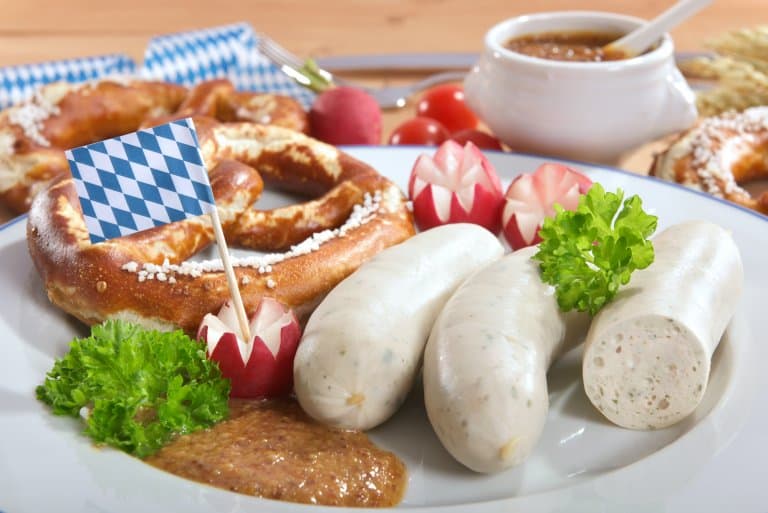
4. Weisswurst with Sweet Mustard
Weisswurst is a pale Bavarian sausage made from minced veal and pork back bacon. It gets seasoned with parsley, onions, and mace for a delicate flavor.
In Bavaria, people eat these sausages before noon as tradition dictates. They’re always served with sweet mustard and soft pretzels.
You can complete your meal with a cold wheat beer, even at breakfast. The sweet mustard pairs perfectly with the mild sausage, creating a classic German taste.

5. Soft Boiled Eggs with Soldiers
Soft boiled eggs are a staple at German breakfast tables. Cook the eggs until the whites are set but the yolks stay runny and golden.
Serve the eggs in small egg cups and slice off the top. Toast strips, called soldiers, are perfect for dipping into the warm yolk.
This simple dish takes less than 10 minutes to make. You just need eggs, bread, and butter.
Kids especially enjoy the fun of dunking their toast soldiers.

6. Rye Bread with Quark and Chives
Rye bread topped with quark and fresh chives is a staple German breakfast. Spread creamy quark cheese over a slice of hearty rye bread and finish it with chopped chives.
The tangy quark pairs well with the dense bread. Chives add a mild onion flavor that brightens each bite.
This simple dish gives you protein from the quark and fiber from the rye bread. You can make it in minutes, which works well for busy mornings.

7. Pretzel with Butter
A fresh pretzel with butter is one of Germany’s most beloved breakfast items. You’ll find these golden-brown baked goods at bakeries across the country, especially in Bavaria.
The pretzel has a chewy, dark crust and soft interior. Germans often slice it in half and spread generous amounts of butter inside.
This simple combination is called Butterbrezeln. You can enjoy your buttered pretzel on its own or pair it with cheese and cold meats.
The salty crust pairs perfectly with creamy butter for a satisfying morning meal.

8. Muesli with Fresh Fruit and Yogurt
Muesli with fresh fruit and yogurt is a healthy German breakfast choice. You’ll find it on breakfast tables across Germany and Switzerland.
This dish combines rolled oats with nuts, seeds, and dried fruit. Top it with creamy yogurt and fresh seasonal fruits.
Many people add a drizzle of honey for sweetness. You can prepare this breakfast quickly on busy mornings.

9. Liverwurst on Dark Bread
Liverwurst on dark bread is a classic German breakfast staple you can prepare in minutes. The rich, smooth spread pairs perfectly with dense, hearty German rye or pumpernickel bread.
Spread a generous layer of liverwurst on your bread. Some people add sliced hard-boiled eggs on top for extra protein.
Others include Swiss cheese or a bit of mustard. You’ll find it served in German homes and bakeries throughout the country.

10. Honey and Jam Spreads
Honey and jam are essential parts of a German breakfast. You’ll find them spread on fresh Brötchen or slices of dark bread alongside butter.
German jams come in many authentic flavors, from traditional strawberry to more unique berry varieties. Local bakeries and grocery stores offer quality options that pair well with both sweet and savory breakfast items.
You can enjoy these spreads simply on buttered bread or rolls. Many Germans prefer natural honey and fruit preserves made with minimal added sugar for the best flavor.
Cultural Significance of German Breakfast Traditions
German breakfast customs reflect deep-rooted values of quality, time, and community that vary distinctly across the country’s regions and shape how families structure their mornings.
Regional Variations Across Germany
Germany’s breakfast traditions change notably as you travel from north to south. In northern regions, you’ll find fish-based options like pickled herring and smoked mackerel alongside bread and cheese.
These coastal influences stem from the area’s proximity to the Baltic and North Seas. Southern Germans, particularly in Bavaria, favor heartier options including Weißwurst (white sausage) and pretzels.
You’ll often see sweet mustard served with these morning sausages. The bread varieties also shift—darker rye breads dominate in the north while wheat-based rolls are more common in the south.
Eastern Germany maintains its own distinct traditions, with Quark (a fresh cheese) appearing more frequently on breakfast tables. Western regions near France show subtle influences with more pastries and butter-rich breads.
Each area takes pride in its local bakeries, which produce breads specific to their region’s traditions.
Role of Breakfast in German Daily Life
Germans view breakfast as the most important meal of the day, dedicating significant time to it especially on weekends. Sunday breakfast, called Sonntagsfrühstück, often lasts two hours or more with family gathered around the table.
Weekday breakfasts are simpler but still substantial. You won’t find Germans skipping breakfast or grabbing food on the go as commonly as in other cultures.
They believe a proper breakfast provides energy for the entire day. The meal serves as a bonding time for families and roommates.
Germans prefer sitting down together rather than eating alone or while standing. This practice reinforces social connections and maintains cultural traditions across generations.
Many families protect their weekend breakfast time as sacred, refusing to schedule other activities during these hours.
Tips for Creating an Authentic German Breakfast Experience
A proper German breakfast requires attention to both presentation and beverage selection. The way you arrange your table and the drinks you serve are just as important as the food itself.
Essential Table Settings and Etiquette
Your table should feature a clean tablecloth or placemats as the foundation. Germans traditionally set out multiple small plates and bowls to hold different breakfast items.
Place bread baskets in the center of your table with fresh rolls and sliced bread. Arrange cheese and cold cuts on separate serving platters.
Provide butter dishes, jam bowls, and honey pots with individual serving spoons.
Key Table Items:
- Small plates for each person (not large dinner plates)
- Bread knife for cutting rolls
- Individual butter knives
- Egg cups for soft-boiled eggs
- Small spoons for spreads
Germans eat slowly and take time with breakfast, especially on weekends. Set out everything at once rather than serving courses.
This allows everyone to choose what they want and eat at their own pace.
Recommended Beverages to Complement Breakfast Foods
Coffee stands as the primary breakfast beverage in Germany. Brew a strong filter coffee rather than espresso-based drinks.
Serve it in regular mugs or cups with milk and sugar on the side. Black tea is another popular choice.
Provide both options so guests can choose their preference.
Traditional Breakfast Drinks:
- Filter coffee (Filterkaffee)
- Black tea
- Fresh orange juice
- Sparkling mineral water
- Hot chocolate for children
Fresh fruit juice, particularly orange juice, appears on most German breakfast tables. Germans also drink still or sparkling mineral water throughout the meal.
Avoid serving sweet sodas or heavily flavored drinks that overpower the subtle tastes of bread, cheese, and meats.
Frequently Asked Questions
German breakfast culture includes both sweet and savory options, from fresh bread rolls with cold cuts to hearty egg dishes and regional specialties. These foods often feature local ingredients and traditional preparation methods that have been passed down through generations.
What traditional dishes are commonly included in a German breakfast?
A traditional German breakfast centers around fresh bread and rolls served with cold cuts and cheese. You’ll find items like bratwurst and leberwurst alongside various sliced meats and cheeses.
Soft boiled eggs are another staple on German breakfast tables. Brötchen, which are crusty bread rolls, get paired with butter, jam, honey, or Nutella for those who prefer sweet options.
The Farmer’s Breakfast, known as Bauernfrühstück, is one of the most popular traditional dishes. This hearty meal combines fried potatoes, eggs, onions, and bacon or ham into a single satisfying dish.
Can you provide some classic German breakfast recipes?
German Apple Pancakes, called Apfelpfannkuchen, are a beloved breakfast treat. You make these by mixing thinly sliced apples into pancake batter and cooking them until golden brown.
Bauernfrühstück is simple to prepare at home. Dice and fry potatoes until crispy, add onions and bacon, then pour beaten eggs over everything and cook until set.
Weisswurst, a traditional Bavarian white sausage, gets served with sweet mustard and fresh pretzels. Simmer these sausages in hot water rather than boiling them to keep the casings from splitting.
What are popular cereals or grains typically eaten at breakfast in Germany?
Muesli is the most common grain-based breakfast food in Germany. This mixture contains rolled oats, nuts, seeds, and dried fruits that you combine with milk or yogurt.
You can also find various types of bread made from whole grains like rye, wheat, and spelt. Germans eat more bread at breakfast than prepared cereals, with options ranging from dense whole grain loaves to lighter rolls.
Some people enjoy hot oatmeal or porridge during colder months. These warm grain dishes often get topped with fresh fruit, honey, or cinnamon.
Which beverages are traditionally consumed with a German breakfast?
Coffee is the primary beverage at German breakfast tables. Most people drink it black or with a small amount of milk, and it’s typically stronger than American-style coffee.
Fresh fruit juices, particularly orange juice and apple juice, are standard breakfast drinks. You’ll also find herbal teas and black tea as popular alternatives to coffee.
Hot chocolate appears at breakfast occasionally, especially for children. Milk is common too, served plain or with a small amount of cocoa powder mixed in.
How is a Bavarian breakfast different from a typical German breakfast?
Bavarian breakfast features Weisswurst, a white veal and pork sausage unique to the region. You eat these sausages before noon according to tradition, accompanied by sweet mustard and fresh pretzels.
The Bavarian breakfast tends to be heartier and includes more meat options than other regional German breakfasts. Obatzda, a creamy cheese spread made with camembert and spices, is another Bavarian specialty.
Bavarians often drink wheat beer with their morning meal on weekends and special occasions. People in other parts of Germany usually prefer coffee as their breakfast beverage.
What spreads and condiments are essential for an authentic German breakfast experience?
Butter is the most basic and necessary spread for German breakfast. People use it on fresh rolls and bread, either alone or as a base layer under other toppings.
Fruit preserves and honey serve as the primary sweet spreads. Germans prefer high-quality jams with real fruit pieces, and many households keep multiple flavors on hand.
Nutella is extremely popular, especially with children and younger adults. Sweet mustard is essential when serving Bavarian white sausages.
Regular mustard goes well with cold cuts and cheese.