
Persimmons are bright orange fruits that bring a sweet, honey-like flavor to your fall and winter cooking. These fruits work well in both sweet and savory dishes, from breakfast muffins to dinner soups.
You can eat them fresh as a snack or use them in recipes that range from simple to fancy. This collection gives you recipes that use both types of persimmons, along with tips for choosing and preparing them.
You’ll find options for baking breads and desserts, making fresh salads and appetizers, and creating warm dishes for cold days. The recipes use common ingredients you likely already have in your kitchen.
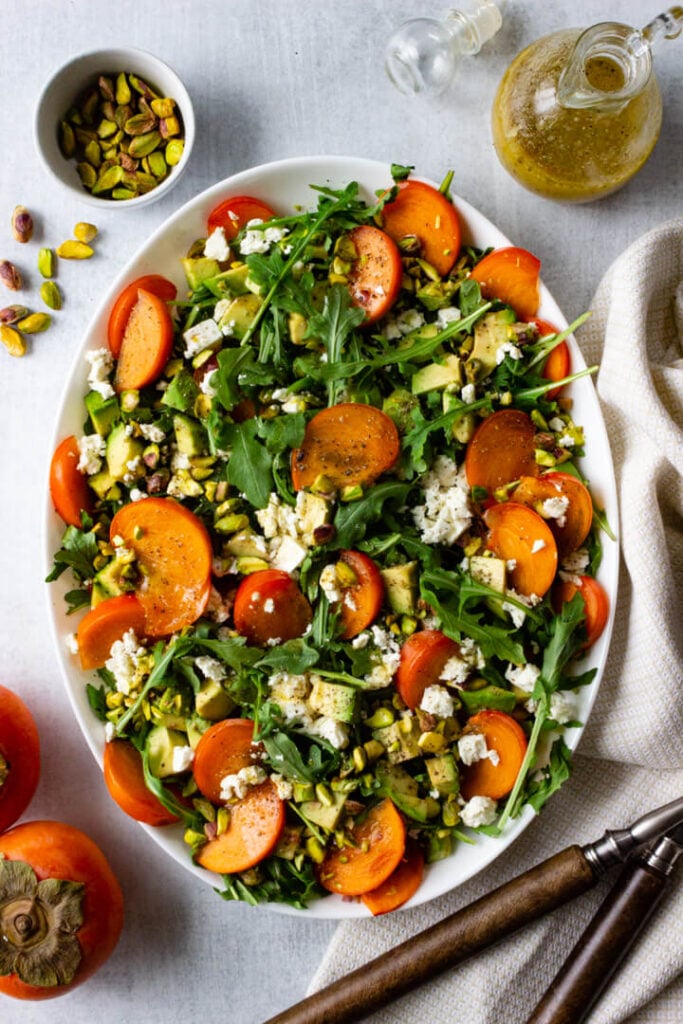
1. Fuyu Persimmon Salad with Arugula and Goat Cheese
This salad combines sweet Fuyu persimmons with peppery arugula and tangy goat cheese. You’ll need firm, bright orange persimmons that you can slice thin while raw.
Start by washing and drying your arugula thoroughly. Slice two Fuyu persimmons into thin pieces and arrange them over the greens.
Crumble goat cheese on top and add your favorite dressing. A simple vinaigrette works well to tie the flavors together.
You can add toasted walnuts or pomegranate seeds for extra texture and taste.

2. Hachiya Persimmon Pudding Cake
This dessert sits somewhere between a moist cake and a rich pudding. You’ll need very ripe Hachiya persimmons for the best results.
The pulp creates a sweet, dense texture that works well with warm spices like cinnamon. The basic recipe calls for persimmon pulp, eggs, flour, sugar, and milk.
Add baking powder and spices to enhance the flavor. Some versions bake in a water bath for even cooking.

3. Spiced Persimmon Muffins with Cinnamon and Ginger
These muffins combine the natural sweetness of ripe persimmons with warm spices. You can use fresh Hachiya persimmons or canned pulp to make them.
Cinnamon and ginger add warmth without hiding the persimmon flavor. You’ll get moist muffins that work for breakfast or snacks.
The recipe is simple and doesn’t require special skills. These muffins taste best when you use fully ripe persimmons, which give you a honey-like sweetness.

4. Persimmon and Walnut Bread
This classic fall bread turns ripe persimmons into a moist, flavorful treat. You’ll mix persimmon puree with warm spices, walnuts, and simple baking ingredients.
Mix baking soda directly into the persimmon puree before adding it to your batter. This step mellows the fruit and brings out its natural sweetness.
You can add raisins for extra sweetness or keep it simple with just walnuts. The bread works well for breakfast or as a dessert.

5. Persimmon Chutney with Apple and Onion
This sweet and tangy chutney combines ripe persimmons with diced apples and chopped onions for a flavorful condiment. Simmer the ingredients with apple cider vinegar, sugar, and warm spices like ginger and cinnamon until the mixture thickens.
The chutney works well on cheese platters alongside soft, creamy cheeses. You can also serve it with roasted chicken or pork dishes.
Prep your ingredients up to 24 hours ahead by peeling and dicing the persimmons, chopping the onions, and mincing the garlic.

6. Persimmon and Pomegranate Salsa
This fresh salsa makes a great alternative to traditional tomato-based versions. Use firm Fuyu persimmons, which work best when they’re still crisp and not too soft.
Dice persimmons and combine them with pomegranate seeds, red onion, cilantro, and jalapeño. A squeeze of lime and pinch of salt balance the flavors.
Serve this salsa with chips as an appetizer. It also pairs well with grilled chicken, fish, or steak.
Some people enjoy it on crackers with cheese or a dollop of sour cream.

7. Persimmon and Brie Crostini
This appetizer combines sweet persimmon slices with creamy Brie cheese on toasted baguette. You can make it in just a few minutes.
Use Fuyu persimmons for this recipe. Slice your baguette thin and top each piece with Brie and persimmon slices.
Add a small sprinkle of brown sugar and fresh thyme if you want. Broil the crostini for 1-2 minutes until the cheese bubbles and turns golden.
The sugar melts and creates a nice sweet flavor with the fruit.

8. Persimmon Smoothie with Banana and Yogurt
This smoothie combines ripe persimmons with banana and yogurt for a creamy breakfast or snack. You can make it in about five to ten minutes using basic ingredients.
The natural sweetness from the fruit means you won’t need added sugar. Add a pinch of cinnamon or your favorite spices for extra flavor.
You’ll get a smooth, refreshing drink that works well on busy mornings. The yogurt adds protein while the persimmon provides vitamins and a mild, sweet taste.

9. Persimmon Pie with Oatmeal Crumble Topping
This pie combines sweet persimmons with a crunchy oat topping. Use Hachiya persimmons for a soft, sweet filling or mix in tart apples for extra flavor.
The crumble topping is simple to make with oats, butter, and brown sugar. It bakes into a crispy layer that contrasts well with the soft fruit below.
You only need about 5 minutes to prep this dessert. Then you bake it until the topping turns golden and the filling bubbles.

10. Roasted Persimmon and Butternut Squash Soup
This soup combines two fall favorites into one warm dish. Roast butternut squash and persimmons together, which brings out their natural sweetness.
Serve this soup as a starter for holiday meals or as a simple dinner. Both ingredients are orange in color and provide good nutrition.
Make this recipe dairy-free and vegan by using coconut milk or vegetable broth. The persimmons add a sweet, fruity taste that balances the squash.
Season it with warming spices to make it more flavorful for cold weather.
Choosing and Preparing Persimmons
The right persimmon variety and ripeness level can make or break your recipe. Knowing how to select and prep these fruits will help you avoid bitter flavors and achieve the best texture in your dishes.
Persimmon Varieties for Cooking
Two main types of persimmons are used in cooking: Hachiya and Fuyu. Each variety works better for different recipes based on its texture and sweetness.
Hachiya persimmons are acorn-shaped with pointed bottoms. They must be completely soft and jelly-like before eating or cooking.
When unripe, they contain high levels of tannins that make your mouth feel dry and puckered. Use fully ripe Hachiyas for purees, baked goods, and puddings where you need a smooth, sweet pulp.
Fuyu persimmons are squat and round like tomatoes. You can eat them while still firm, making them easier to work with.
They stay crisp when ripe and won’t turn your mouth bitter. These work well for slicing into salads, roasting, or adding to savory dishes.
You can also puree Fuyus in a blender for baking recipes.
How to Tell When Persimmons Are Ripe
Hachiya persimmons are ready when they feel like water balloons and the skin looks almost translucent. The fruit should be so soft that it nearly collapses when you pick it up.
Any firmness means the fruit isn’t ready and will taste unpleasant. Fuyu persimmons ripen when their color deepens to a rich orange.
They should yield slightly to gentle pressure but still feel mostly firm. The skin may develop brown speckles, which is normal and doesn’t affect the flavor.
To speed up ripening, place persimmons in a paper bag with an apple or banana. The ethylene gas from these fruits helps persimmons ripen faster.
Check them daily to catch them at the perfect stage.
Tips for Peeling and Slicing Persimmons
For ripe Hachiya persimmons, cut off the top stem area and scoop out the flesh with a spoon. The skin peels away easily from fully ripe fruit.
You don’t need to peel them at all if you’re blending the pulp for baking. Fuyu persimmons can be eaten with the skin on or peeled with a vegetable peeler.
Remove the leafy top and slice them like apples into rounds or wedges. A sharp knife works best since the firm flesh can be slippery.
Remove any seeds you find while cutting, though many persimmons are seedless. Pat sliced persimmons dry with a paper towel before adding them to recipes where excess moisture could be a problem.
Pairing and Serving Ideas
Persimmons work well with both sweet and savory ingredients, making them easy to add to many types of meals. The fruit’s natural sweetness pairs nicely with rich, creamy, and spiced foods.
Flavor Combinations That Complement Persimmons
Cheese makes an excellent partner for persimmons. Goat cheese, ricotta, and mascarpone balance the fruit’s sweetness with their tangy, creamy flavors.
You can also try aged cheeses like parmesan or manchego for a sharper contrast. Nuts add texture and depth to persimmon dishes.
Walnuts, pecans, and almonds work particularly well. Their earthy, slightly bitter notes complement the honey-like taste of ripe persimmons.
Warm spices enhance persimmon’s natural flavor. Cinnamon, ginger, cardamom, and nutmeg bring out the fruit’s sweet qualities.
Fresh herbs like rosemary, thyme, and mint add brightness to savory persimmon recipes. The fruit pairs well with proteins too.
Pork and chicken benefit from persimmon’s touch of sweetness. You can also add persimmons to grain bowls with quinoa or farro for a balanced meal.
Serving Suggestions for Every Occasion
For breakfast, slice Fuyu persimmons into oatmeal or yogurt bowls. Persimmon muffins make a quick morning treat that you can prepare ahead of time.
As appetizers, create crostini by spreading goat cheese on toasted bread and topping with thin persimmon slices. This simple dish works well for parties and gatherings.
Persimmons make a great addition to fall salads. Dice them and toss with mixed greens, nuts, and a light vinaigrette.
They also work in roasted vegetable dishes alongside Brussels sprouts or sweet potatoes. For dessert, use soft Hachiya persimmons in puddings, cookies, or pies.
The fruit’s natural sweetness means you can reduce added sugar in baked goods.
Frequently Asked Questions
Persimmons work well in both sweet and savory preparations, and knowing how to handle different varieties will help you get better results. These common questions cover preparation methods, recipe ideas, and ingredient combinations.
How can I incorporate persimmons into a savory dish?
Add sliced Fuyu persimmons to salads with greens like arugula, paired with goat cheese and nuts. The fruit’s natural sweetness balances well with bitter greens and tangy cheese.
Make persimmon chutney as a condiment for roasted meats and cheese boards. Cook diced persimmons with onions, apples, vinegar, and spices until the mixture thickens.
This works especially well as a spread for sandwiches or as a side for pork dishes.
What are some healthy ways to prepare persimmons in meals?
Eat fresh Fuyu persimmons raw as a snack to get the most nutrients without added sugars or fats. Slice them and add them to yogurt or oatmeal for breakfast.
Add persimmons to salads for a light preparation with natural sweetness. Mix them with leafy greens, nuts, and a simple vinaigrette.
Blend ripe Hachiya persimmons into smoothies for a nutrient-rich drink.
What is a good recipe for persimmon bread?
Persimmon and walnut bread combines the fruit’s sweet flavor with the crunch of toasted nuts. Use ripe Hachiya persimmon pulp mixed with all-purpose flour, eggs, sugar, and baking spices like cinnamon and nutmeg.
Bake the bread at 350°F for about an hour until a toothpick comes out clean. Make sure your Hachiya persimmons are completely soft before you scoop out the pulp.
This ensures your bread has the right moisture and sweetness.
Are there any unique persimmon dessert recipes?
Hachiya persimmon pudding cake offers a different texture than typical desserts. This dessert uses the soft pulp from very ripe persimmons mixed with flour, milk, and eggs.
It has a custard-like consistency. Spiced persimmon muffins with cinnamon and ginger provide a warming fall treat.
The spices complement the honey-like sweetness of the fruit. You can also make persimmon cookies by adding the fruit pulp to standard cookie dough recipes.
Which recipes are best for using Fuyu persimmons?
Fuyu persimmons work best in recipes where you need firm, sliceable fruit. Their crisp texture holds up well in fresh applications like salads and salsas.
Dice Fuyu persimmons for fruit salads or slice them thin for tarts and galettes. You can also roast them when cut into wedges and cooked with root vegetables.
The firm flesh stays intact during cooking, unlike Hachiya persimmons.
What are some common food pairings to avoid when cooking with persimmons?
Strong acidic ingredients like citrus juice can overpower persimmon’s mild sweetness. While a small amount of acid can work, too much will make the fruit taste bland.
Very spicy foods can mask persimmons’ delicate flavor. Heavy cream-based sauces can also overwhelm the fruit’s natural taste.
Keep seasonings simple so the persimmon flavor comes through clearly.