
German cooking brings together hearty comfort foods with rich flavors that have been loved for hundreds of years. The country’s food includes everything from tender meat dishes and crispy fried foods to fresh salads and sweet desserts that make any meal special.
These authentic German recipes let you make traditional dishes at home using simple ingredients and clear cooking steps. You’ll learn about classic main courses like schnitzel and bratwurst, side dishes such as potato salad and sauerkraut, and famous desserts including Black Forest cake and apple strudel.
1. Sauerbraten
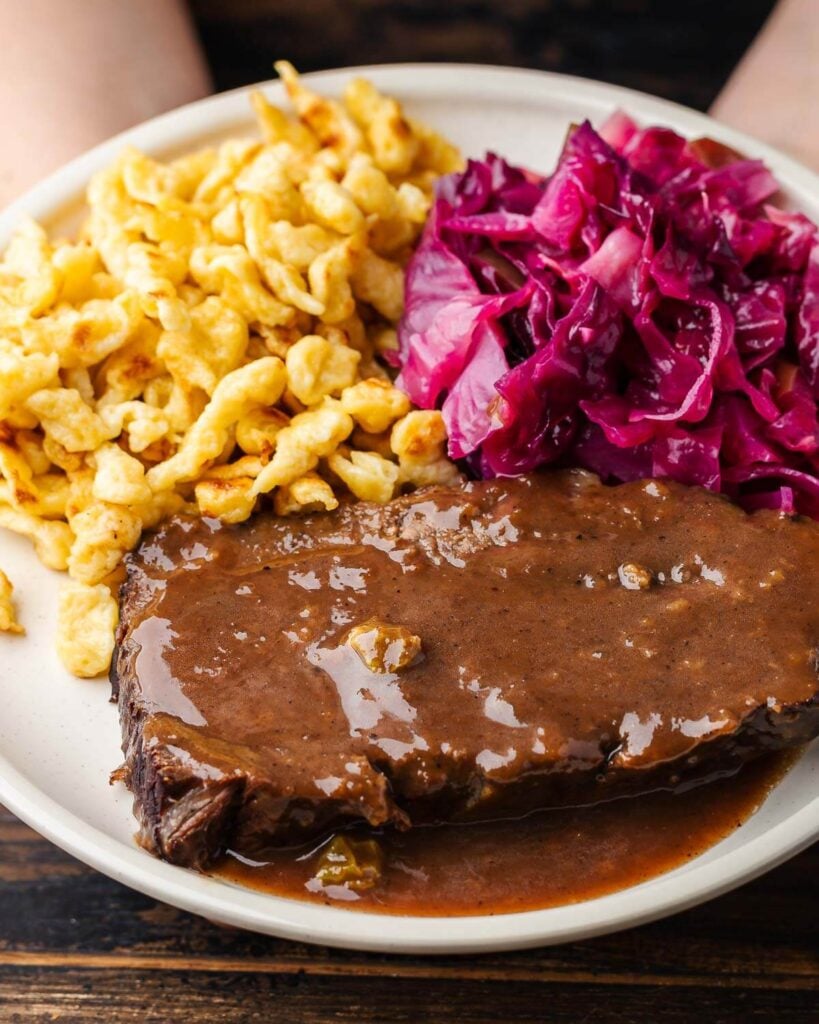
Sauerbraten is Germany’s beloved national dish. You marinate beef in wine, vinegar, and spices for several days.
The long marinade makes the meat incredibly tender. You then slow roast it until fork-tender.
The dish comes with a sweet and sour gravy. This creates the perfect balance of flavors.
You can cook sauerbraten in the oven or slow cooker. Most recipes need about 2-4 hours of cooking time after marinating.

2. Wiener Schnitzel
Wiener Schnitzel means “Viennese cutlet” in German. This dish comes from Austria but became popular in German cooking too.
You make it with thin veal cutlets that you pound flat. Coat the meat in seasoned bread crumbs and fry until golden brown.
The result is crispy on the outside and tender inside. Serve it with fresh lemon juice squeezed on top.

3. Bratwurst
Bratwurst is Germany’s most famous sausage. This grilled pork sausage has a smoky, savory taste that makes it perfect for any meal.
You can cook bratwurst many ways. Grill it with onions and mustard for a classic German meal.
Serve it with sauerkraut and German potato salad. Bratwurst works well in soups, casseroles, and skillet meals too.
You can even use it on pizza or in pasta dishes for something different.

4. German Potato Salad
German potato salad is different from American potato salad. It uses vinegar instead of mayonnaise as the main dressing.
Serve this dish warm or at room temperature. The potatoes are mixed with a tangy dressing made from vinegar, sugar, and bacon fat.
Crispy bacon pieces and sautéed onions add flavor and texture. Some recipes include mustard or fresh herbs like parsley.
This side dish works great with grilled meats and sausages.

5. Rouladen
Rouladen is one of Germany’s most beloved comfort foods. You make this dish by rolling thin beef slices around a filling.
The traditional filling includes mustard, onions, pickles, and bacon. Spread mustard on the beef, add the other ingredients, then roll it up tight.
Brown the rolls first, then simmer them in rich gravy. The slow cooking makes the beef tender and flavorful.
Germans often serve rouladen with potato dumplings and red cabbage.

6. Spaetzle
Spaetzle are homemade German egg noodles that come from southern Germany. They started in the Swabian region of Baden-Württemberg.
You only need four basic ingredients to make this dish. The noodles cook in just 15 minutes, making them a quick side dish.
These soft noodles pair well with German sausages like bratwurst. You can also serve them with gravy, cheese, or mushroom sauce.
Spaetzle go well with many German meat dishes. They taste great plain or mixed with other ingredients.

7. Sauerkraut
Sauerkraut is fermented cabbage that tastes tangy and slightly sweet. This classic German dish has been part of German cooking for hundreds of years.
You can use sauerkraut in many different ways. It works great in hearty stews and fresh salads.
Serve it as a side dish with pork chops or bratwurst. The best sauerkraut uses natural ingredients without preservatives.

8. Kartoffelpuffer (Potato Pancakes)
You’ll find these crispy potato pancakes served throughout all regions of Germany. Kartoffelpuffer are golden-brown patties made from grated potatoes and onions.
Pan-fry them until they become crunchy on the outside and tender inside. The contrast in textures makes them irresistible.
Serve Kartoffelpuffer with sweet applesauce or savory sour cream. They work perfectly for breakfast, lunch, or dinner.
Most recipes include eggs, but simple versions use only potatoes, salt, and oil. This makes them one of the few German potato dishes that can be vegan.

9. Eisbein (Pork Knuckle)
Eisbein is a beloved German dish featuring tender pork knuckle with crispy skin. You’ll find this hearty meal served throughout Germany, especially in Berlin and Bavaria.
The pork knuckle is typically salt-cured, then slow-cooked for hours until the meat becomes fall-off-the-bone tender. You can prepare it by roasting or simmering in broth.
Traditional sides include tangy sauerkraut, mashed potatoes, and spicy mustard.

10. Leberkäse
Leberkäse is a popular German meatloaf from Bavaria. Despite its name meaning “liver cheese,” it contains no liver or cheese.
You’ll find this comfort food made with ground beef and pork. The meat gets mixed with spices and baked until golden brown.
Germans often eat leberkäse hot on a sandwich or fried in slices. You can make it at home using a meat grinder and simple seasonings.

11. Königsberger Klopse
You’ll love these traditional German meatballs from East Prussia. They date back over 200 years to the city of Königsberg.
These meatballs are different because you poach them instead of frying. You make them with beef and pork, then simmer them in broth.
The creamy white sauce makes this dish special. You add capers, lemon, and sometimes anchovies for a tangy flavor.
Serve Königsberger Klopse with boiled potatoes called Salzkartoffeln.

12. Maultaschen
Maultaschen are traditional German pasta pockets from the Swabia region. You’ll find them stuffed with ground meat, spinach, and onions wrapped in tender pasta dough.
These hearty dumplings look like large ravioli. You can serve them boiled in hot broth or pan-fried in butter.
Germans often eat Maultaschen during Lent and Easter, but you can enjoy them year-round. You can also slice them into soups or salads for extra flavor.

13. Flammkuchen
Flammkuchen is Germany’s answer to pizza. This thin, crispy flatbread comes from the Alsace region.
Its simple toppings include a base spread with crème fraîche or sour cream, then sliced onions and bacon pieces. The dough bakes in a very hot oven, creating a cracker-like crust that’s perfectly crispy.
You can make flammkuchen in under 30 minutes. It works great as an appetizer or light meal.

14. Apfelstrudel
Apfelstrudel is a classic German dessert that features sweet spiced apples wrapped in flaky pastry. This traditional treat combines tart apples with raisins and warm spices.
The dessert uses thin layers of dough that create a light, crispy texture. You can make it from scratch or use phyllo dough for easier preparation.
Serve Apfelstrudel warm with vanilla ice cream or whipped cream.

15. Black Forest Cake
You’ll love this famous German dessert known as Schwarzwälder Kirschtorte. This traditional cake features layers of chocolate sponge cake soaked in cherry brandy or kirsch.
The cake includes whipped cream and tart cherries between each layer. You can make it for birthdays, anniversaries, or any special occasion.
The combination of rich chocolate, sweet cream, and tangy cherries creates perfect balance.

16. Brezel (Pretzel)
The German pretzel is a classic bread that symbolizes Bavarian culture. You’ll recognize its twisted shape and golden-brown crust covered in coarse salt.
Traditional brezeln have a soft, chewy inside with a crispy exterior. The secret lies in dipping the dough in lye solution before baking.
You can make authentic German pretzels at home using flour, yeast, salt, and water. The lye treatment gives them their distinctive flavor and dark color.

17. Schwarzwälder Kirschtorte (Black Forest Gateau)
This classic German cake comes from the Black Forest region. You’ll find layers of chocolate sponge cake with whipped cream and cherries.
The traditional recipe uses Kirsch brandy to soak the cherries. This gives the cake its authentic German flavor.
You build the cake with three chocolate layers. Between each layer, you add whipped cream and the brandy-soaked cherries.
The top gets decorated with more whipped cream, fresh cherries, and chocolate shavings.

18. German Meatloaf
German meatloaf, called hackbraten or falscher hase, is a hearty comfort food. You make it with a mix of ground pork and beef.
The meat gets seasoned with traditional German spices. Some recipes include a hard-boiled egg in the center of the loaf.
You can serve it hot with potatoes and vegetables. It also tastes great cold the next day.
The dish often comes with gravy made from the cooking drippings.

19. Rotkohl (Braised Red Cabbage)
Rotkohl is Germany’s beloved sweet and sour red cabbage dish. You braise the cabbage slowly with apples, onions, and vinegar.
This traditional side dish pairs perfectly with German meats like bratwurst and roast beef. The cabbage becomes tender and flavorful during cooking.
You can make rotkohl with brown sugar for sweetness and spices like cloves. Some recipes add bacon for extra richness.

20. Semmelknödel (Bread Dumplings)
Semmelknödel are traditional German bread dumplings from Bavaria. You make them using stale bread, milk, eggs, onions, and parsley.
These hearty dumplings work perfectly as a side dish with meat and gravy. They soak up sauces well, making every bite flavorful.
Serve Semmelknödel with roasts, stews, or mushroom gravy.

21. Frikadellen (German Meatballs)
Frikadellen are traditional German meatballs that look more like flat patties. You make them with ground beef and pork mixed together.
The mixture includes bread crumbs, eggs, onions, and simple spices. Shape them into thick, flat rounds instead of balls.
Pan-fry them until they get a crispy brown crust on both sides. They cook faster than regular meatballs because of their flat shape.
Serve them with potatoes, bread, and mustard. They taste great as a main dish or snack.
Essential Ingredients in German Cooking
German cooking relies on hearty, simple ingredients that create rich, comforting flavors. The cuisine uses specific spices like caraway and juniper, traditional meats including various sausages, and key baking ingredients such as rye flour and marzipan.
Staple Spices and Herbs
Caraway seeds are the most important spice in German cooking. You’ll find them in sauerkraut, rye bread, and many meat dishes.
Bay leaves add depth to stews and roasts. German cooks use them fresh or dried in braised meats and soups.
Juniper berries give German dishes their unique flavor. They’re essential for making sauerbraten and flavoring game meats.
Paprika appears in many regional dishes, especially from southern Germany. Both sweet and hot versions are common.
Fresh herbs like parsley, dill, and chives finish many dishes. Parsley is particularly important for potato salads and meat dishes.
Mustard seeds create the famous German mustards. You can use whole seeds in pickling and ground seeds for sauces.
Traditional Meats and Sausages
Pork is the most popular meat in German cooking. You’ll use it for schnitzel, roasts, and countless sausages.
Bratwurst comes in many regional varieties. Each type uses different spice blends and preparation methods.
Weisswurst is a delicate white sausage made with veal and pork. It’s traditional in Bavaria and requires gentle cooking.
Leberwurst (liver sausage) is essential for authentic German meals. You can serve it as a spread or in cooked dishes.
Beef appears in sauerbraten and hearty stews. German cooks often braise tougher cuts for maximum flavor.
Goose and duck are holiday favorites. These birds pair perfectly with apples, prunes, and traditional side dishes.
Smoked meats like ham and bacon add rich flavors to many recipes. They often season vegetables and soups.
Key Baking Ingredients
Rye flour creates Germany’s famous dark breads. You’ll need it for authentic pumpernickel and other traditional loaves.
Marzipan appears in many German desserts and candies. It’s made from ground almonds and sugar.
Quark is a fresh cheese essential for cheesecakes and pastries. It has a tangy flavor and creamy texture.
Vanilla sugar flavors many German baked goods. It’s more common than vanilla extract in traditional recipes.
Hazelnuts and almonds add texture and flavor to cookies and cakes. Ground nuts often replace some flour in recipes.
Rum and brandy enhance many desserts. German bakers use them in fruit cakes and holiday cookies.
Active dry yeast creates the country’s famous breads and sweet doughs. Fresh yeast is preferred when available.
Classic German Cooking Techniques
German cooking relies on three main methods that create the rich flavors and textures found in traditional dishes. These techniques include slow braising for tender meats, precise baking skills for breads and pastries, and time-tested pickling methods for preserving vegetables.
Slow Braising Methods
Braising is the heart of German cooking. This method turns tough cuts of meat into tender, flavorful dishes.
Sauerbraten uses this technique perfectly. You marinate beef for 3-7 days in vinegar and spices.
Then you sear the meat and cook it slowly in liquid for 2-3 hours.
The key steps are:
- Marinate meat in acidic liquid
- Sear at high heat to lock in flavor
- Cook low and slow in covered pot
- Add vegetables in the last hour
Rouladen also uses braising. You roll thin beef around pickles and onions.
The meat cooks in its own juices with wine or broth.
Keep your braising liquid at 325°F. This breaks down tough fibers without drying out the meat.
Baking and Pastry Skills
German baking requires exact measurements and timing. You need to understand how different flours and fats work together.
Bread making starts with the right flour. German breads use rye and whole wheat flours.
You knead the dough until it’s smooth and elastic. Let it rise twice for the best texture.
Strudel dough needs special handling. You stretch it paper-thin by hand.
The dough should be so thin you can read through it.
Key baking tips:
- Measure ingredients by weight, not volume
- Use room temperature eggs and butter
- Preheat your oven fully before baking
- Don’t open the oven door too early
Cake layers like those in Black Forest cake need gentle mixing. You fold ingredients together to keep the batter light and airy.
Pickling and Preserving
Germans pickle vegetables to preserve them through winter months. This adds tangy flavors to heavy meals.
Sauerkraut ferments cabbage with just salt and time. You shred cabbage thin and pack it with salt in jars.
The natural bacteria create the sour taste over 3-4 weeks.
Quick pickles work faster. You heat vinegar with sugar and spices.
Pour this hot liquid over vegetables and let them cool.
Common pickling ratios:
- 1:1 ratio of vinegar to water for mild pickles
- 2:1 ratio of vinegar to water for sour pickles
- 2 tablespoons salt per cup of liquid
Red cabbage often gets pickled with apples and wine. The acid keeps the red color bright and adds sweet-sour flavor that pairs well with meat dishes.
Frequently Asked Questions
Many home cooks have questions about preparing authentic German dishes and planning German-themed meals. These answers cover menu planning, beginner-friendly recipes, and essential dishes that represent German culinary traditions.
Start with Sauerbraten as your main course. This marinated pot roast takes time but creates an impressive centerpiece.
Add Wiener Schnitzel as a second protein option. The crispy breaded cutlets appeal to most guests.
Include German Potato Salad as a warm side dish. It pairs well with both meat options and offers a tangy flavor.
Serve bratwurst as an appetizer or casual option. Guests can enjoy these sausages while other dishes finish cooking.
Add Rouladen for variety. These beef rolls stuffed with pickles and onions show traditional German cooking techniques.
Can you suggest easy German recipes suitable for a school project?
German Potato Salad works well for school projects. You need potatoes, bacon, onions, and vinegar-based dressing.
Bratwurst requires minimal cooking skills. You can pan-fry or grill the sausages and serve with mustard.
Simple pretzels make good project foods. The dough needs flour, water, yeast, and salt for basic versions.
Sauerkraut demonstrates fermentation. You can buy ready-made versions and heat them with caraway seeds.
Apple strudel uses store-bought pastry. Fill it with sliced apples, sugar, and cinnamon for an easy dessert.
Which German recipes are considered the easiest for a quick meal preparation?
Bratwurst cooks in under 15 minutes. Pan-fry the sausages and serve with mustard and bread.
German Potato Salad uses pre-cooked potatoes. Mix them with warm bacon dressing for faster preparation.
Schnitzel cooks quickly when pounded thin. Bread and fry the cutlets in just a few minutes per side.
Currywurst takes minutes to make. Slice cooked bratwurst and top with curry ketchup sauce.
German pancakes bake in one pan. Mix the batter and let the oven do the work.
Could you provide a list of typical dishes found in German cuisine?
Meat dishes include Sauerbraten, Wiener Schnitzel, and Rouladen. These represent traditional German protein preparations.
Sausages play a major role in German cooking. Bratwurst, knockwurst, and weisswurst appear in many meals.
Potato dishes are essential to German cuisine. German Potato Salad, sauerbraten, and fried potatoes show up frequently.
Cabbage appears in multiple forms. Sauerkraut, red cabbage, and stuffed cabbage are common preparations.
German breads and pastries complete meals. Pretzels, strudel, and dark rye breads accompany most dishes.
What are some must-try foods for anyone exploring German culinary traditions?
Sauerbraten represents traditional German pot roast cooking. The meat marinates for days in vinegar and spices.
Wiener Schnitzel shows classic breading techniques. The thin, crispy cutlets originated in Austria but became German favorites.
German Potato Salad differs from American versions. It uses warm bacon dressing instead of mayonnaise.
Bratwurst demonstrates German sausage-making skills. Each region has its own recipe and preparation style.
Rouladen combines multiple cooking methods. The beef rolls braise slowly after browning and stuffing.
How can I prepare a German-themed potluck with simple yet authentic recipes?
Make German Potato Salad for easy transport. Serve it warm or at room temperature in a slow cooker.
Prepare bratwurst in advance and keep it warm. Offer different mustard varieties for authentic serving.
Bring sauerkraut as a traditional side dish. Heat it with bacon bits and caraway seeds for extra flavor.
Make soft pretzels for authentic German bread. Shape the dough and sprinkle with coarse salt before baking.
Prepare a simple German dessert like apple cake. Use a basic butter cake recipe with sliced apples on top.