
Polish food brings together simple ingredients and time-honored cooking methods to create meals that warm you from the inside out. These dishes have been passed down through generations, and they still taste just as good today as they did years ago.
You don’t need fancy equipment or hard-to-find ingredients to make authentic Polish meals in your own kitchen.
This collection of recipes will show you how to cook traditional Polish dishes, from filled dumplings and hearty stews to fresh salads and sweet baked goods.
You’ll learn the basic techniques that make Polish cooking special. Each recipe uses straightforward steps that any home cook can follow.

1. Classic Potato and Cheese Pierogi
Pierogi ruskie stands as one of Poland’s most beloved dishes. These soft dumplings are filled with mashed potatoes and twaróg, a tangy Polish curd cheese.
You’ll make a simple dough from flour, warm water, butter, and salt. The filling combines creamy potatoes with cheese and sautéed onions for traditional flavor.
After boiling, serve them with caramelized onions and butter. You can freeze pierogi, so make large batches ahead of time.

2. Traditional Bigos Hunter’s Stew
Bigos is one of Poland’s most beloved dishes. You’ll find it at family gatherings and celebrations throughout the year.
This hearty stew combines sauerkraut and fresh cabbage with various meats like pork, kielbasa, and bacon. Mushrooms add an earthy flavor while prunes bring a subtle sweetness.
Let the stew cook slowly for hours so all the flavors blend together. Many cooks say bigos tastes even better the next day after the ingredients have more time to mix.
Serve it with crusty rye bread or boiled potatoes for a filling meal.

3. Polish Cabbage Rolls (Gołąbki)
Gołąbki are tender cabbage leaves wrapped around a savory filling of ground meat and rice. The name means “little doves” in Polish, though they look nothing like birds.
Stuff them with seasoned pork or beef mixed with cooked rice and onions. Place the rolls in a baking dish and cover with tomato sauce.
Bake them slowly until the cabbage becomes soft and the flavors blend together. This traditional comfort food is popular at family dinners throughout Poland.

4. Homemade Kielbasa Sausage
Making kielbasa from scratch lets you control the quality and flavor of this classic Polish sausage. You’ll need ground pork, garlic, and traditional spices like marjoram and black pepper.
The process takes about two days, with a few hours of work each day. Grind the meat yourself or ask your butcher to do it for you.
After stuffing the sausage into casings, smoke it for traditional flavor or cook it fresh. Freeze your homemade kielbasa in portions for easy meals later.

5. Polish Potato Pancakes (Placki ziemniaczane)
Polish potato pancakes are a beloved comfort food you can make with just a few simple ingredients. Grate raw potatoes and onions, then mix them with eggs and a bit of seasoning.
Fry them in oil until they become crispy and golden on the outside while staying soft inside. Serve them as a main dish or side dish.
Traditional toppings include sour cream or applesauce. These budget-friendly pancakes work well for breakfast, lunch, or dinner.
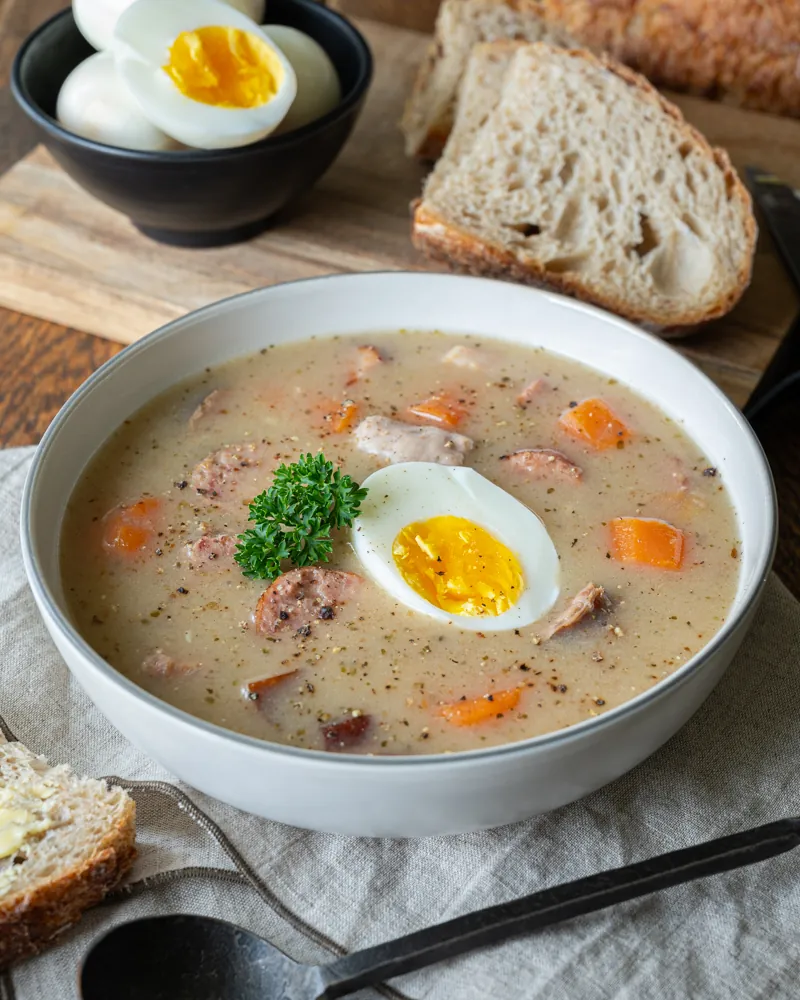
6. Sour Rye Soup (Żurek) with Sausage
Żurek is a traditional Polish soup with a tangy flavor that comes from fermented rye flour. The fermented starter gives the soup its signature sour taste, similar to sourdough.
People serve this soup during Easter, but Polish families enjoy it throughout the year. The soup typically includes white sausage, hard-boiled eggs, and root vegetables in a savory broth.
The key ingredients are the fermented rye starter, Polish sausage, garlic, and marjoram. Many recipes also include bacon, potatoes, and a touch of sour cream for richness.

7. Sweet Cheese Blintzes (Naleśniki)
Naleśniki are thin Polish crepes you can fill with sweet or savory ingredients. The most popular version features a sweet cheese filling made from farmer’s cheese or cottage cheese mixed with cream cheese, sugar, and vanilla.
Prepare delicate crepes, then fill them with the sweetened cheese mixture and roll them up. After filling, pan-fry them in butter until golden on both sides.
Serve your blintzes with fresh fruit, jam, or a dusting of powdered sugar. They work well for breakfast or dessert.

8. Hearty Beetroot Borscht (Barszcz)
Barszcz czerwony is a classic Polish beet soup that brings deep, earthy flavors to your table. This clear red broth gets its bright color from beets and offers a tangy taste that sets it apart from other versions of borscht.
Polish families traditionally serve this soup during Christmas Eve dinner, often paired with small mushroom dumplings called uszka. You can also enjoy it as a warming everyday meal throughout the year.
The soup is lighter than Ukrainian or Russian borscht since vegetables are typically strained after cooking, leaving you with a smooth, translucent broth.

9. Polish Leek Salad (Surówka z pora)
Polish leek salad is a quick and simple dish that takes less than five minutes to prepare. This traditional salad combines tender leeks with fresh ingredients like apples, carrots, and dill.
The dressing typically uses yogurt, sour cream, or mayonnaise to create a creamy texture. Some versions include hard-boiled eggs and cottage cheese for extra protein.
Leeks belong to the same plant family as garlic and onions, which makes them rich in nutrients. Serve this salad as a side dish with your main meal or enjoy it on its own.

10. Apple and Poppy Seed Babka
Apple and poppy seed babka combines two beloved Polish ingredients in one sweet yeast bread. This cake is easier to make than traditional poppy seed rolls since you don’t need to grind the seeds yourself.
The soft dough holds layers of crunchy poppy seeds and fresh apples. Polish families serve this babka during Easter and Christmas celebrations, though you can bake it any time of year.
Some recipes call it Makowiec Japoński or Brudas. The apples add moisture while the poppy seeds create a nutty flavor and pleasant texture throughout each slice.
Key Ingredients in Authentic Polish Cooking
Polish cooking relies on simple, hearty ingredients that create rich flavors through traditional preparation methods. The foundation includes potatoes, cabbage, pork, sour cream, and specific spices that define the cuisine’s distinctive taste.
Traditional Spices and Seasonings
Polish cuisine uses a focused set of spices that enhance rather than overpower the natural flavors of dishes. Marjoram stands out as the most essential herb in Polish cooking, appearing in soups, meat dishes, and sausages.
You’ll also find it frequently paired with pork.
Caraway seeds add a distinctive flavor to breads, cabbage dishes, and stews.
Bay leaves appear in nearly every soup and stew recipe. Black pepper and allspice provide the basic warmth in Polish dishes.
Fresh dill is critical for summer soups and salads, while dried mushrooms bring an earthy depth to winter cooking.
Garlic appears regularly but in modest amounts.
Polish cooking doesn’t rely on the intense spice heat common in other cuisines. The goal is creating layers of savory, comforting flavors.
Essential Pantry Staples
Your Polish pantry needs several key ingredients to prepare authentic dishes. Potatoes serve as the foundation for countless recipes, from pierogi fillings to side dishes.
Cabbage appears in multiple forms—fresh in salads, fermented as sauerkraut, and cooked in stews like bigos. Sauerkraut deserves special attention since it’s used in many traditional dishes.
Sour cream enriches soups, sauces, and serves as a topping for pierogi and other dishes. You’ll need various grains including buckwheat, barley, and rye flour for authentic breads.
Keep pork products on hand, including bacon, kielbasa, and various cuts for roasting. Dried mushrooms, particularly porcini, are non-negotiable for authentic flavor in soups and sauces.
Pickles and pickled vegetables play a major role in Polish meals. Stock your pantry with beets, cucumbers, and other preserved vegetables.
Sourcing Quality Ingredients
Finding authentic ingredients makes a real difference in your Polish cooking. Look for Polish delis or European grocery stores in your area that carry imported products like proper kielbasa and authentic sauerkraut.
Farmers markets offer fresh cabbage, potatoes, and seasonal produce that match the quality used in traditional Polish cooking. Buy whole spices when possible and grind them yourself for better flavor.
For dried mushrooms, seek out specialty stores or online retailers that sell European varieties. The flavor difference between quality dried porcini and standard mushrooms is significant.
You can substitute some ingredients, but certain items like proper kielbasa and high-quality sour cream directly impact your results. Read labels carefully—authentic Polish products will list simple, traditional ingredients without excessive additives.
Cooking Tips for Perfecting Polish Dishes
Polish cooking relies on specific techniques passed down through generations and understanding common pitfalls that can affect flavor and texture. Master these fundamentals to create authentic dishes that taste like they came from a Polish kitchen.
Time-Honored Preparation Techniques
Polish cuisine depends on proper preparation methods that build layers of flavor. When making pierogi, work the dough until it becomes smooth and elastic, then let it rest for at least 30 minutes before rolling.
This creates a tender texture that won’t tear during cooking. For bigos (hunter’s stew), cook the dish over low heat for several hours.
The longer cooking time allows the sauerkraut, meat, and spices to blend together. Many Polish cooks make bigos a day ahead because the flavors improve overnight.
When preparing zurek (sour rye soup), use authentic fermented rye starter or kwas. This ingredient gives the soup its signature tangy taste that vinegar cannot replicate.
Always use fresh ingredients when possible. Polish cooking highlights simple flavors, so quality matters.
Use real butter instead of margarine, and choose fresh cabbage for golabki (stuffed cabbage rolls). Salt your cooking water generously when boiling pierogi or kopytka (potato dumplings).
The water should taste like seawater to properly season the dough.
Common Mistakes to Avoid
Don’t overfill pierogi or the filling will leak during cooking. Use about one teaspoon of filling per dumpling and seal the edges firmly by pressing with a fork.
Avoid cooking pierogi at a rolling boil. Use a gentle simmer to prevent them from breaking apart.
They’re ready when they float to the surface, which takes about 3-4 minutes. Never skip browning meat before adding it to stews like bigos.
This step creates depth of flavor that defines Polish comfort food. Don’t rush the caramelization of onions in Polish dishes.
Cook them slowly over medium-low heat until they turn golden brown. This process takes 15-20 minutes but adds essential sweetness.
Resist adding too much liquid to dishes like bigos or golabki. Polish stews should be thick and hearty, not soupy.
You can always add more liquid, but removing excess is difficult.
Frequently Asked Questions
Polish cooking brings together hearty ingredients like potatoes, cabbage, and meat into dishes that work for everyday dinners and special celebrations. These questions cover everything from quick weeknight meals to traditional feast preparations.
What are some traditional Polish dinner dishes?
Traditional Polish dinners center around filling, home-style meals. Pierogi filled with potato and cheese make a popular main course when served with sour cream and fried onions.
Gołąbki, or cabbage rolls stuffed with meat and rice, appear frequently on dinner tables throughout Poland. Bigos, known as hunter’s stew, combines sauerkraut with fresh cabbage, multiple types of meat, and dried mushrooms.
This dish develops deeper flavors when reheated over several days. Kielbasa sausage often accompanies these meals, either grilled or pan-fried.
Potato pancakes called placki ziemniaczane round out traditional dinner options. You can serve them as a side dish or main course with sour cream or applesauce.
Which Polish recipes are considered quick and easy to prepare?
Potato pancakes take about 30 minutes from start to finish. You only need potatoes, eggs, flour, and basic seasonings to make them.
You can buy kielbasa pre-made and simply heat it. Pan-frying or grilling takes less than 15 minutes.
Pierogi cook quickly once assembled. Many cooks prepare large batches and freeze them for quick future meals.
Can you provide a list of family favorite Polish meals?
Pierogi top the list of family favorites in Polish households. These dumplings come with countless filling options including potato and cheese, sauerkraut and mushroom, or ground meat.
Gołąbki remain a comfort food that families request regularly. The combination of tender cabbage, seasoned meat, and tomato sauce appeals to multiple generations.
Bigos serves as a family gathering dish because it feeds many people. Potato pancakes work well for family breakfasts or dinners.
Kielbasa appears at family barbecues, holiday meals, and casual weeknight dinners.
What are the top Polish chicken dishes to try at home?
Polish chicken soup, called rosół, uses a whole chicken simmered with vegetables and herbs. This clear broth serves as a traditional remedy for colds and a standard Sunday meal.
You can make kotlet schabowy with chicken instead of the traditional pork cutlet. Bread and fry thin chicken breasts until golden and crispy.
Chicken appears in some versions of bigos, adding protein to the traditional hunter’s stew. Stuffed chicken breast with mushrooms and cheese offers another classic preparation method.
How can one make a traditional Polish feast for special occasions?
Start your feast with clear borscht or żurek, a sour rye soup. These soups prepare your guests for the heavier dishes to come.
Serve multiple types of pierogi as a first course. Include at least two varieties like potato-cheese and sauerkraut-mushroom.
Bigos works as a main dish centerpiece because it feeds many people and represents traditional Polish cooking. Add gołąbki and kielbasa to give guests protein options.
Include sides like potato pancakes, sauerkraut, and pickled vegetables. Finish with Polish desserts like paczki donuts or poppy seed cake.
What are some must-try Polish foods that are popular worldwide?
Pierogi have gained international recognition as Poland’s most famous dish. You can find them on menus across North America and Europe in restaurants that don’t specialize in Polish food.
Kielbasa appears in grocery stores worldwide. People use the smoked sausage in non-Polish recipes.
Bigos remains popular among those who know Polish cuisine well. Its complex flavors and hearty nature appeal to food lovers looking for authentic Eastern European dishes.
Gołąbki have similar appeal. They’re sometimes known by other names in different countries.