
French cooking has a reputation for being fancy and hard to make, but many traditional dishes are simple and meant for everyday meals. The techniques and ingredients in French cuisine focus on building flavor through proper cooking methods and quality ingredients.
You don’t need to be a trained chef to bring these classic dishes into your kitchen.
These recipes will teach you the basic techniques of French cooking while giving you meals that work for both weeknight dinners and special occasions. From slow-cooked stews to elegant desserts, each dish shows a different side of French food culture.
You’ll learn how to make the sauces, soups, and pastries that define this style of cooking.
1. Coq au Vin
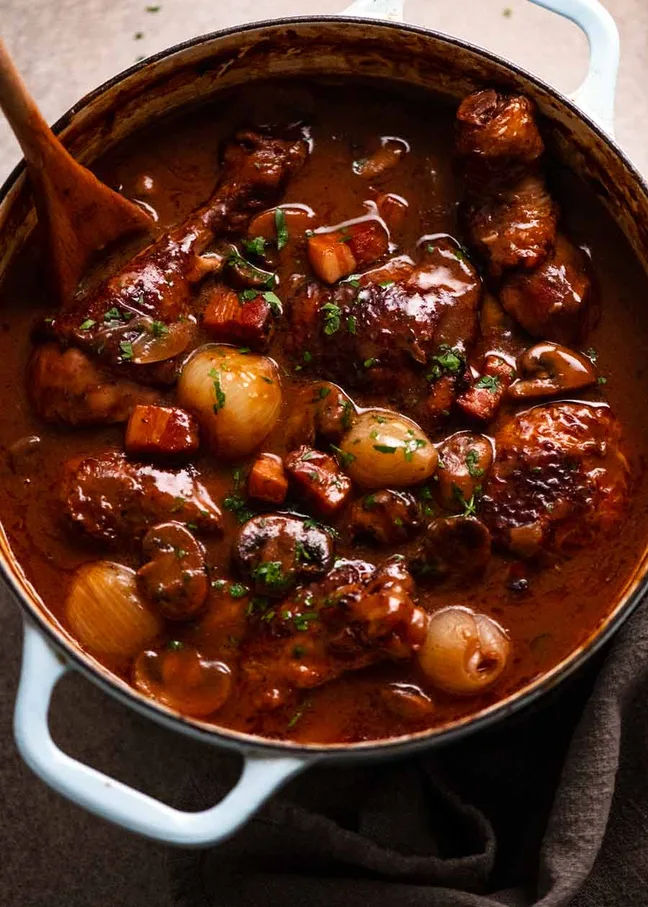
Coq au vin is a French chicken stew from the Burgundy region. Braise chicken slowly in red wine with bacon, mushrooms, and pearl onions.
The dish tastes even better when made a day ahead, making it ideal for dinner parties since you can reheat it as guests arrive.
The long cooking time creates deep, rich flavors. Serve it with a baguette to soak up the sauce.

2. Beef Bourguignon
Beef Bourguignon is a French beef stew that turns simple ingredients into something special. Braise beef slowly in red wine with bacon, mushrooms, and onions.
This dish comes from Burgundy, France. The slow cooking makes the beef tender and creates a rich sauce.
You’ll need good red wine, beef chuck, and patience. The meat cooks for hours until it falls apart with your fork.
Pearl onions and mushrooms add texture and flavor to the stew.

3. Ratatouille
Ratatouille is a classic vegetable dish from Provence in southern France. Use fresh summer vegetables like eggplant, zucchini, bell peppers, and tomatoes.
Cook each vegetable separately in olive oil before combining them. The traditional method involves searing each ingredient first, then letting them simmer with garlic and herbs like thyme and rosemary.
Serve ratatouille as a side dish or main course. It tastes even better the next day.

4. Cassoulet
Cassoulet is a slow-cooked bean stew from southwestern France. Combine white beans with meats like duck confit, pork shoulder, and sausage in traditional versions.
The dish takes time to prepare with overnight soaking and a long cooking process. As it bakes, a golden crust forms on top that you stir back into the stew several times.
This hearty recipe works well for feeding a crowd on cold evenings.

5. Tarte Tatin
Tarte Tatin is a classic French upside-down apple tart. Caramelize apples in butter and sugar in a pan, then cover them with pastry and bake.
Flip the whole tart over after baking so the caramelized apples are on top. The dessert has a rich, buttery caramel flavor that pairs perfectly with the soft apples.
Serve Tarte Tatin warm with vanilla ice cream or crème fraîche.

6. French Onion Soup
French onion soup is a comforting dish you can make at home. Slowly caramelize sweet onions in beef broth until they become tender and rich.
Top the soup with toasted bread and melted Gruyère cheese. Broil it until the cheese turns golden and bubbly.
Use quality ingredients and take your time to caramelize the onions properly.

7. Quiche Lorraine
Quiche Lorraine stands as France’s most famous savory tart. This dish comes from the Lorraine region in northeastern France.
You need just a few key ingredients: a flaky pastry crust, eggs, cream, bacon, and Gruyère cheese. The filling creates a rich custard when baked.
Serve quiche Lorraine warm or cold. It works well for breakfast, brunch, lunch, or dinner.

8. Duck à l’Orange
Duck à l’Orange is one of France’s most recognizable dishes. Enjoy crispy roasted duck paired with a tangy orange sauce that balances sweet and tart flavors.
The dish combines rich, savory duck meat with a bright citrus glaze. Traditional recipes use a whole roasted duck, but you can also make it with duck breasts for quicker cooking.
The orange sauce brings together fresh citrus, butter, and pan drippings to create a smooth coating.

9. Bouillabaisse
Bouillabaisse is a seafood stew from Marseille, a port city in southern France. Use fresh fish, shellfish like shrimp and mussels, and a tomato-based broth.
The broth gets its flavor from saffron, fennel, and a touch of orange. Serve this dish with toasted bread and rouille, a garlic mayonnaise spread.
The key is using good seafood and building layers of flavor in your broth.

10. Potato Leek Soup
This French classic brings together simple ingredients for a satisfying meal. Use potatoes, leeks, butter, and broth to create this beloved dish.
The soup is known by several names in France, including Potage Parmentier and Potage Parisien. Some versions use cream while traditional recipes skip it entirely.
Serve this soup hot or cold. Top your bowl with fresh herbs, crispy bacon, or a drizzle of olive oil for extra flavor.
Essentials of French Cooking
French cooking relies on quality ingredients and time-tested methods that build deep flavors. Understanding these basics helps you create authentic dishes at home.
Key Ingredients and Pantry Staples
A well-stocked French pantry starts with high-quality butter and good olive oil. You need these fats for most recipes.
Fresh herbs matter in French cooking. Keep parsley, thyme, tarragon, and chives on hand. Bay leaves are essential for soups and stews.
Core pantry items include:
- Dijon mustard
- White and red wine vinegar
- Dry white wine for cooking
- All-purpose flour
- Chicken and beef stock
- Shallots and garlic
Buy good cheese like Gruyère and Comté. French cooking also uses crème fraîche often, which adds richness to sauces and soups.
Sea salt and black peppercorns are non-negotiable. Freshly ground pepper makes a big difference in taste.
Traditional Cooking Techniques
French cooking builds flavor through specific methods. Caramelize onions slowly to create sweetness and depth. This technique takes patience but transforms simple ingredients.
Sautéing means cooking food quickly in a small amount of fat over high heat. Keep the food moving in the pan. This method works for vegetables and proteins.
Braising combines two steps. Brown meat first, then cook it slowly in liquid. This technique makes tough cuts tender and creates rich sauces.
Make a roux to thicken sauces and soups. Cook equal parts butter and flour together before adding liquid. Stir constantly to prevent burning.
Deglaze the pan by adding wine or stock after cooking meat, then scrape the bottom with a wooden spoon.
Cultural and Historical Context
French cooking developed over centuries through regional differences and social customs. These traditions shape how French people prepare meals and celebrate important moments together.
Regional Influences on French Cuisine
France’s diverse geography created distinct cooking styles across its regions. Coastal areas like Brittany and Normandy rely on seafood and dairy products, particularly butter and cream.
The Mediterranean south uses olive oil, tomatoes, and fresh herbs like thyme and rosemary. Burgundy became famous for its wine-based dishes like Boeuf Bourguignon, using local red wines to braise beef.
The southwest region developed rich, hearty foods such as Cassoulet, a slow-cooked bean and meat stew. Mountain regions like the Alps contributed cheese-heavy dishes including fondue and raclette.
Each area’s climate and available ingredients shaped what you find on traditional French tables today.
The Role of French Recipes in Celebrations
French meals mark important life events and bring families together. Sunday lunches often feature roasted chicken or leg of lamb, served with multiple courses over several hours.
Christmas celebrations include oysters, foie gras, and Bûche de Noël. Epiphany calls for Galette des Rois, a puff pastry cake with almond cream.
Bastille Day brings outdoor feasts with grilled meats and seasonal vegetables.
Key Celebration Foods:
- Weddings: Multi-course meals with champagne
- Easter: Roasted lamb with spring vegetables
- New Year’s Eve: Champagne and seafood platters
UNESCO recognized French gastronomic meals as cultural heritage in 2010. These traditions emphasize shared dining experiences, quality ingredients, and respect for cooking techniques passed through generations.
Frequently Asked Questions
French cooking involves specific techniques and ingredients that can seem challenging at first. These answers cover everything from selecting the right dishes for dinner parties to finding recipes that work for beginners.
What are some classic French main dishes that are perfect for dinner parties?
Coq au Vin stands out as an excellent choice for entertaining guests. This dish features chicken braised in red wine with mushrooms, bacon, and pearl onions.
The rich sauce develops deep flavors that improve when made a day ahead. Beef Bourguignon offers another impressive option for gatherings.
Braise beef chunks in burgundy wine with carrots, onions, and herbs until the meat becomes tender. Cassoulet works wonderfully for casual dinner parties.
This hearty bean and meat stew from southern France combines white beans with duck confit, pork, and sausage.
Beef Bourguignon fits perfectly into formal menus. Plate it elegantly with buttered noodles or roasted potatoes alongside seasonal vegetables.
Coq au Vin provides a refined centerpiece for special occasions. Arrange the chicken pieces carefully and garnish with fresh herbs.
Tarte Tatin makes an ideal dessert for formal dinners. Serve it warm with a dollop of crème fraîche or vanilla ice cream.
What are the top 10 most popular French foods to cook at home?
Coq au Vin ranks among the most beloved French recipes. Home cooks appreciate its straightforward technique and impressive results.
Beef Bourguignon appears frequently in home kitchens. The recipe requires time but uses simple steps that any cook can follow.
Ratatouille offers a vegetarian option that showcases summer vegetables. Layer eggplant, zucchini, tomatoes, and bell peppers with herbs and olive oil.
Cassoulet provides comfort food appeal. The slow-cooked beans absorb flavors from the meat.
Tarte Tatin gives home bakers a chance to create a classic French dessert. The caramelization process transforms simple apples into something special.
Which traditional French chicken recipes are must-tries for an authentic experience?
Coq au Vin represents the most authentic French chicken preparation. Traditional recipes call for a mature rooster, though chicken works well in modern versions.
Marinate the chicken in red wine, then braise it slowly with aromatics. The dish originated in the Burgundy region of France.
Local cooks used wine to tenderize tough rooster meat. Include bacon or lardons, mushrooms, and pearl onions for authentic flavor.
How can I prepare simple French dishes that are great for a school project?
Ratatouille works perfectly for school projects. You need basic vegetables like zucchini, eggplant, tomatoes, and bell peppers.
Slice the vegetables and layer them in a baking dish with tomato sauce and herbs. This dish teaches knife skills and introduces flavor combinations.
Tarte Tatin offers another manageable option. Caramelize apples in butter and sugar, then top them with pastry dough.
The recipe demonstrates basic baking techniques. It shows how heat transforms ingredients.
What easy-to-follow French recipes can impress guests at a dinner gathering?
Ratatouille impresses guests while requiring minimal skill. You arrange sliced vegetables in overlapping circles for visual appeal.
The dish bakes hands-free while you prepare other courses.
Coq au Vin seems complicated but follows straightforward steps. You brown chicken pieces, cook bacon and vegetables, then simmer everything in wine.
You can prepare the recipe ahead of time, which reduces stress when hosting.
Tarte Tatin delivers bakery-quality results from simple ingredients. You need apples, butter, sugar, and puff pastry.
The dramatic presentation when you flip the tart onto a serving plate never fails to impress dinner guests.