
Yellow squash is a summer vegetable that shows up in gardens and stores in large amounts during warm months. Many people end up with more yellow squash than they know what to do with.
This vegetable works well in many different cooking methods and pairs with various ingredients. You can prepare yellow squash by grilling it, baking it in casseroles, roasting it with herbs, making it into soup, or adding it to stir-fries and gratins.
Each cooking method brings out different qualities in the squash. Some recipes keep things simple with just a few ingredients, while others combine yellow squash with other vegetables and seasonings.
The recipes ahead cover everything from quick side dishes to main courses. You’ll also find tips on picking good squash at the store and storing it properly.
The cooking advice will help you get better results no matter which recipe you choose.

1. Creamy Yellow Squash Casserole with Cheese and Sour Cream
This casserole combines tender yellow squash with creamy sour cream and melted cheese. You’ll layer sliced squash with a mixture of sour cream, mayonnaise, and cheddar cheese.
The dish includes sautéed onions for extra flavor. A buttery cracker topping adds a satisfying crunch to contrast the creamy interior.
You can prepare this casserole in about 45 minutes. It works well as a side dish for weeknight dinners or family gatherings.

2. Grilled Yellow Squash Skewers with Mediterranean Herbs
Thread yellow squash pieces onto skewers with cherry tomatoes and red onions for a colorful side dish. Cut uniform pieces so everything cooks evenly on the grill.
Brush your skewers with olive oil and season them with herbs like oregano, thyme, and rosemary. These Mediterranean flavors complement the mild taste of yellow squash.
Grill the skewers for about 8-10 minutes, turning them occasionally until you see nice char marks. The squash should be tender but not mushy when done.

3. Roasted Yellow Squash with Garlic and Thyme
This roasted yellow squash recipe takes just 15 minutes of prep time. Slice the squash into rounds, toss them with olive oil, minced garlic, and fresh or dried thyme, then roast at 450°F for about 20 minutes.
The high heat creates caramelized edges while keeping the inside tender. Garlic and thyme add savory flavor that complements the squash’s natural sweetness.
You can serve this alongside grilled chicken or fold it into pasta. It pairs well with most main dishes.

4. Yellow Squash and Bell Pepper Stir-Fry
This stir-fry combines yellow squash with colorful bell peppers for a simple side dish. You can have it ready in about 15 minutes.
Slice your yellow squash into thin rounds. Cut bell peppers into strips and slice an onion.
Heat oil in a large skillet over medium heat. Add the vegetables and cook for 4-5 minutes until they’re crisp-tender.
Season with garlic, salt, and pepper to taste. You can also add herbs like basil or oregano.
The vegetables should stay slightly crunchy, not soft. Serve this dish warm as a side with chicken, fish, or rice.

5. Classic Yellow Squash Soup with Onions and Broth
This soup brings together simple ingredients for a light and healthy meal. Start by cooking diced onions in butter or olive oil until they become soft.
Add chopped yellow squash and let it cook until tender. Pour in chicken or vegetable broth and let everything simmer for about 20 minutes.
The squash should be easy to pierce with a fork when it’s done. Blend the soup smooth with an immersion blender or leave it chunky.
Season with salt and pepper to taste.
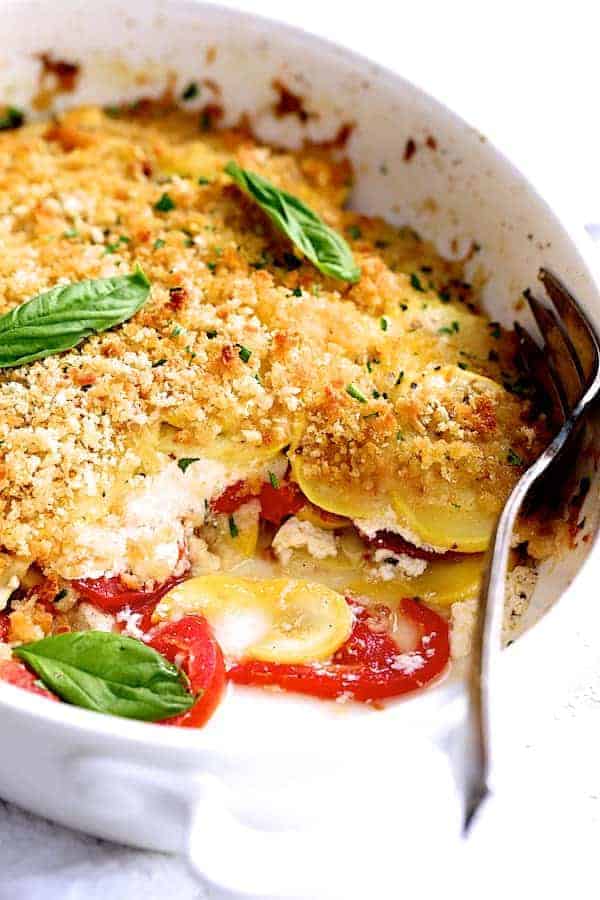
6. Yellow Squash and Tomato Gratin
This gratin makes an excellent side dish or vegetarian main course. Layer sliced yellow squash and tomatoes in a baking dish with cheese and seasonings.
The vegetables become tender while the top turns golden and bubbly. Add ricotta or Gruyère cheese between the layers for extra creaminess.
Fresh herbs like basil or thyme boost the flavor. Some recipes include garlic and onions for more depth.
Slice your vegetables thin so they cook evenly. Bake until the cheese melts and the top gets crispy.

7. Baked Yellow Squash with Parmesan Crust
This recipe turns yellow squash into a crispy, cheesy side dish with minimal effort. Slice the squash, add Parmesan cheese and simple seasonings, then bake until golden.
The cheese creates a crispy crust on top while the squash stays tender inside. You only need a few basic ingredients to make this dish work.
It pairs well with chicken, pork, or potatoes for an easy weeknight meal. The recipe takes less than 30 minutes from start to finish.

8. Yellow Squash Ratatouille with Zucchini and Eggplant
Yellow squash shines in this French vegetable dish. Combine it with zucchini, eggplant, and tomatoes for a colorful meal.
Slice your vegetables into rounds of similar thickness. This helps them cook evenly and look nice when layered.
Make ratatouille in a skillet or bake it in the oven. Simmer the vegetables in a tomato-based sauce with herbs.
Each piece stays tender but holds its shape. Serve this dish warm or at room temperature as a side or main course.

9. Sautéed Yellow Squash with Fresh Basil
This quick side dish takes less than 15 minutes to make. Cook sliced yellow squash in oil over medium-high heat until it browns lightly.
Add minced garlic during the last minute of cooking. The squash should be tender but still have a slight bite to it.
Toss the cooked squash with fresh basil leaves and a sprinkle of Parmesan cheese. Season with salt and pepper to taste.
The basil adds a bright, fresh flavor that pairs well with the mild squash.

10. Yellow Squash and Corn Casserole
Yellow squash and corn casserole brings together two summer vegetables in one easy dish. Mix sliced yellow squash with cream-style corn, cheese, and biscuit mix to create a creamy texture.
Combine all ingredients in a bowl without beating, then pour everything into a 9×13 inch baking dish. Bake at 350 degrees for about 60 minutes until the casserole sets and becomes firm.
This casserole works well as a side dish for family dinners or potlucks.
Selecting and Storing Yellow Squash
Choosing fresh yellow squash and storing it correctly will help you get the best flavor and texture in your recipes. Proper handling can extend the life of your squash up to a week.
How to Choose the Freshest Yellow Squash
Look for yellow squash that feels firm and heavy for its size. The skin should be bright yellow and glossy without any dull spots or blemishes.
Small to medium-sized squash (about 6 to 8 inches long) taste better than larger ones. Bigger squash often have tougher skin and larger seeds that can make them watery and less flavorful.
Check the squash for soft spots, wrinkles, or bruises. These are signs the squash is old or has been damaged.
The stem end should look fresh and green, not dried out or brown. Gently press the skin with your fingernail.
Fresh squash will have skin that resists puncturing. If the skin feels too soft or breaks easily, the squash is past its prime.
Proper Storage Techniques for Maximum Freshness
Wash your yellow squash under cool water and gently remove any dirt. Pat it completely dry with a clean towel before storing, since moisture can cause the squash to spoil faster.
Store whole squash in the crisper drawer of your refrigerator. Place it in an airtight container or sealed plastic bag, pressing out as much air as possible before sealing.
Whole yellow squash will stay fresh for up to one week when stored properly. Keep it away from fruits like apples and bananas that release ethylene gas, which can make your squash spoil more quickly.
Don’t wash or cut your squash until you’re ready to use it. Once cut, yellow squash should be wrapped tightly and used within 2 to 3 days.
Cooking Tips for the Best Results
Yellow squash needs proper handling and the right flavor combinations to reach its full potential. Understanding what to avoid and which ingredients complement its mild taste will help you create better dishes.
Common Mistakes to Avoid
Don’t overcook your yellow squash. This vegetable has high water content and turns mushy when exposed to heat for too long.
Cook it just until tender, which usually takes 5-7 minutes for sautéing or 15-20 minutes for roasting. Avoid adding salt too early.
Salt draws out moisture from the squash, making it soggy and watery. Season your squash near the end of cooking or after you remove it from heat.
Skip washing after you cut it. Wet squash won’t brown properly and releases extra water during cooking.
Wash the whole squash before slicing, then pat it completely dry. Don’t crowd the pan.
When you pack too much squash into one pan, it steams instead of browning. Leave space between pieces so they can caramelize and develop flavor.
Flavor Pairings That Enhance Yellow Squash
Herbs and aromatics bring out the best in yellow squash. Fresh basil, thyme, and garlic create a classic combination.
Onions add sweetness while rosemary provides an earthy note. Fat sources help carry flavor and create texture.
Butter gives richness, while olive oil keeps things lighter. Both options help the squash brown nicely.
Cheese works well with yellow squash’s mild taste. Parmesan adds a sharp, salty kick.
Mozzarella melts smoothly in casseroles and baked dishes. Acidic ingredients brighten the flavor.
A squeeze of lemon juice right before serving cuts through the squash’s subtle sweetness. Balsamic vinegar adds depth to roasted preparations.
Complementary vegetables include zucchini, tomatoes, corn, and bell peppers. These summer vegetables share similar cooking times and create balanced dishes.
Frequently Asked Questions
Yellow squash works well in everything from creamy casseroles to simple grilled dishes. You can prepare it using basic cooking methods like roasting, grilling, and sautéing.
These common questions cover healthy meal options, dinner ideas, dessert possibilities, beginner-friendly recipes, casserole preparation, and seasoning choices.
What are some tasty yellow squash recipes for a healthy meal?
You can make roasted yellow squash with garlic and thyme for a low-calorie side dish that provides vitamins and fiber. Classic yellow squash soup with onions and broth offers a light meal option with minimal fat.
Yellow squash and bell pepper stir-fry gives you a quick vegetable-focused dish that works well for lunch or dinner. Grilled yellow squash skewers with Mediterranean herbs provide lean protein when you add chicken or shrimp.
How do I incorporate yellow squash into my dinner dishes?
Add sliced yellow squash to stir-fries with other vegetables and your choice of protein for a complete meal. You can also layer it into casseroles or bake it with cheese and herbs as a side dish.
Grilled yellow squash works well alongside grilled meats or fish. Dice it into soups, chop it for salads, or slice it thin for sandwiches and wraps.
Can yellow squash be used in dessert recipes, and if so, how?
Yellow squash can replace zucchini in baking recipes like quick breads, muffins, and cakes. Its mild flavor and high moisture content make it suitable for sweet dishes.
Grate the squash finely and squeeze out excess water before mixing it into your batter. The squash adds moisture without a strong vegetable taste.
You won’t notice it in the final product when combined with sugar and spices.
What are the easiest yellow squash recipes for beginners?
Roasted yellow squash requires just slicing, tossing with oil and salt, and baking at 400°F for 20-25 minutes. Sautéed yellow squash takes even less time—you simply slice it and cook in a pan with butter or oil for 5-7 minutes.
Grilled yellow squash skewers need basic prep work of cutting the squash into chunks and threading them onto skewers. Yellow squash soup uses straightforward steps of sautéing onions, adding squash and broth, then blending until smooth.
What is the best way to prepare a yellow squash casserole?
Start by slicing your yellow squash into thin rounds. Cook them until tender.
Mix the cooked squash with sour cream, shredded cheese, and mayonnaise in a baking dish. Add breadcrumbs or crackers on top for texture.
Bake the casserole at 350°F for 25-30 minutes. Wait until the top turns golden and the mixture bubbles around the edges.
You can add onions, garlic, or herbs to boost the flavor. Some recipes include eggs to help bind the ingredients together.
Are there unique spices or seasonings that enhance the flavor of yellow squash?
Garlic and thyme create a classic combination that brings out the squash’s natural sweetness.
Mediterranean herbs like oregano, basil, and rosemary work well for grilled or roasted preparations.
Paprika and cumin add warmth to sautéed yellow squash dishes.
You can use Italian seasoning for a simple all-purpose option that includes multiple complementary herbs.
Red pepper flakes give heat to stir-fries and other cooked preparations.
Add fresh herbs like parsley, dill, or chives at the end to brighten the finished dish.