
Hibachi cooking brings the fun and flavor of Japanese steakhouse meals right to your kitchen. You don’t need fancy equipment or hard-to-find ingredients to make these dishes.
With just a hot griddle or skillet and some basic seasonings, you can cook restaurant-quality hibachi meals at home.
This collection covers everything from tender steaks and buttery shrimp to crispy fried rice and grilled vegetables. You’ll learn the cooking techniques that make hibachi special, plus tips for getting that authentic steakhouse taste.
Whether you want to make a complete surf and turf dinner or just try your hand at the famous onion volcano, these recipes give you all the steps you need.

1. Classic Hibachi Steak with Mushrooms and Onions
This dish brings Japanese steakhouse flavor to your kitchen. You’ll cook tender steak bites with mushrooms and onions on a hot griddle or skillet.
The recipe uses sirloin or NY strip steak cut into bite-sized pieces. Sear the meat with soy sauce, garlic, and butter to create a savory glaze.
Cook the mushrooms and onions alongside the steak so they soak up all the flavors. You can finish everything in about 25 minutes, making it perfect for weeknight dinners.

2. Hibachi Chicken with Yum Yum Sauce
This dish brings Japanese steakhouse cooking to your home kitchen. Cook diced chicken breast in sesame oil and soy sauce until it turns golden brown.
The chicken stays tender and juicy when you cook it over high heat. The yum yum sauce makes this recipe stand out.
This creamy, tangy sauce uses mayonnaise, tomato paste, and garlic as its base. You can make the entire meal in about 30 minutes.
You only need basic ingredients and a hot pan or griddle. Serve it with rice and vegetables for a complete meal.
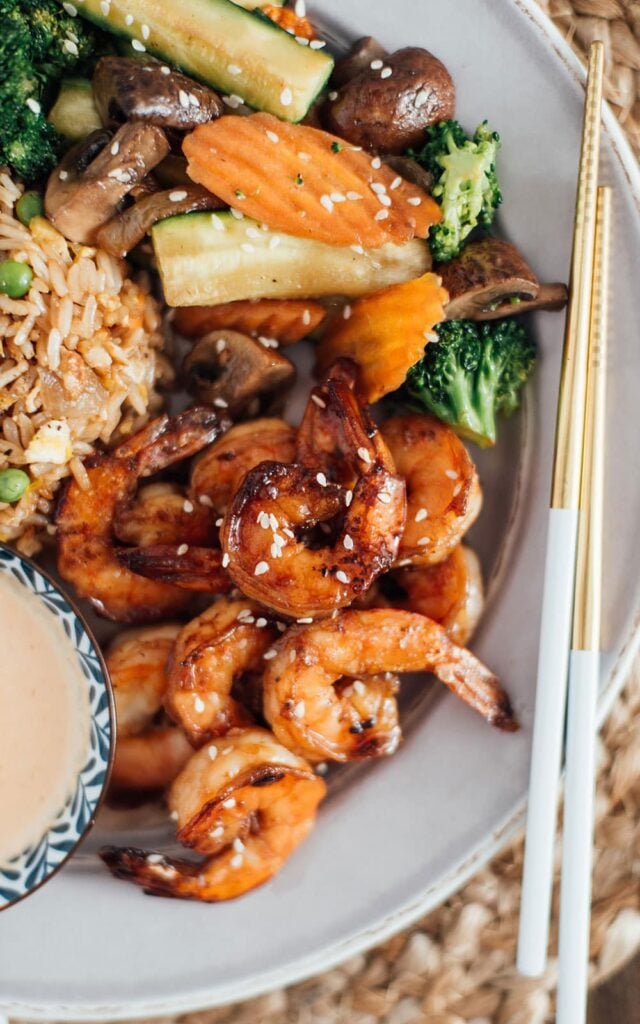
3. Garlic Butter Hibachi Shrimp
This recipe brings restaurant-style hibachi shrimp to your kitchen in under 15 minutes. Cook the shrimp over high heat in garlic butter to create a caramelized exterior while keeping the inside tender.
Work quickly once your skillet is hot. Add butter and garlic first, then sear the shrimp for 2-3 minutes per side.
Finish with soy sauce and a squeeze of lemon for brightness. Serve your hibachi shrimp over rice with vegetables for a complete meal.

4. Hibachi Fried Rice with Eggs and Scallions
You need day-old rice for the best results. Fresh rice has too much moisture and makes the dish sticky.
Start by scrambling eggs in garlic butter. Push them to the side and add your cold rice to the hot pan.
The key is high heat and constant stirring. Mix in soy sauce and sesame oil for that restaurant flavor.
Add chopped scallions near the end so they stay bright and crisp. You can make this dish in under 15 minutes once your ingredients are ready.

5. Vegetable Hibachi with Zucchini and Mushrooms
This dish brings the steakhouse experience to your kitchen with minimal effort. Cook fresh zucchini, mushrooms, and onions in a simple garlic butter and soy sauce blend.
The vegetables cook quickly on high heat, keeping them crisp and flavorful. Use a flat griddle or large skillet to get that signature hibachi texture.
The combination of butter, soy sauce, and garlic creates a savory coating that complements the vegetables without overpowering them. Serve this alongside rice or your favorite protein for a complete meal.

6. Hibachi Scallops with Lemon Butter Sauce
Scallops are a popular choice at hibachi restaurants because they cook in just five minutes. Sear them in butter until they develop a golden crust on the outside while staying tender inside.
Pat your scallops dry before cooking. This helps them get that restaurant-quality sear.
Add fresh lemon juice and garlic to create a simple sauce that brings out the natural sweetness of the seafood. Serve these scallops with vegetables or fried rice for a complete meal that looks impressive but takes almost no time to prepare.

7. Spicy Hibachi Noodles with Soy and Garlic
This dish brings heat to classic hibachi noodles. Cook your pasta and toss it with butter, garlic, soy sauce, and red pepper flakes or sriracha.
The garlic butter base keeps the noodles rich and savory. The soy sauce adds the signature umami flavor you expect from hibachi.
Your noodles will be ready in about 15 minutes. Adjust the spice level by adding more or less hot sauce.
Serve them alongside grilled chicken or steak for a complete meal.

8. Hibachi Salmon with Teriyaki Glaze
Hibachi salmon with teriyaki glaze brings Japanese steakhouse flavors to your kitchen in about 20 minutes. Cook salmon fillets in a hot pan to create a crispy golden crust while keeping the inside tender.
The teriyaki glaze combines soy sauce, garlic, ginger, and a touch of sweetness. This creates a savory coating that balances the rich salmon perfectly.
Pair this dish with fried rice and stir-fried vegetables for a complete meal. The recipe uses simple ingredients you likely have at home.

9. Hibachi Onion Volcano Side Dish
The onion volcano is a classic hibachi trick that adds excitement to your meal. You can make this at home with basic ingredients.
Start by peeling a dome-shaped onion and cutting it in half. Separate the rings on one side and stack them together to form a volcano shape.
Use a squeeze bottle to pour oil into the middle of the volcano. Add 80-proof vodka to the center.
When you ignite it, you’ll get a dramatic flame effect that looks just like the restaurants.

10. Hibachi Beef and Shrimp Surf and Turf
This classic combination brings together tender beef and juicy shrimp in one dish. Cook both proteins over high heat with garlic butter, soy sauce, and ginger for bold flavors.
The recipe works well with ribeye or sirloin steak cut into bite-sized pieces. Fresh shrimp pairs perfectly with the beef to create a balanced meal.
You can make this dish at home in about 30 minutes. Serve it with fried rice, noodles, or vegetables for a complete dinner that tastes like restaurant quality.
Essential Hibachi Cooking Techniques
High heat and quick cooking define hibachi-style preparation. Proteins get a perfect sear while vegetables stay crisp.
The right techniques for each ingredient type make the difference between restaurant-quality results and disappointing meals.
Grilling Perfect Proteins
Start with proteins at room temperature for even cooking. Pat meat, seafood, or chicken completely dry with paper towels before seasoning.
Moisture on the surface prevents proper searing and creates steam instead of that signature crust. Heat your cooking surface to high, around 400-450°F.
Add a thin layer of oil with a high smoke point like vegetable or sesame oil. Place proteins on the hot surface and resist moving them for 2-3 minutes to develop a golden-brown sear.
For chicken, cut into bite-sized pieces about 1 inch thick. Cook for 3-4 minutes per side until the internal temperature reaches 165°F.
Steak works best at 1/2 to 3/4 inch thickness, cooking 2-3 minutes per side for medium doneness. Shrimp cooks fastest at just 1-2 minutes per side.
Look for the flesh to turn opaque and pink. Remove proteins from heat immediately when done to avoid overcooking.
Vegetable Preparation and Sautéing
Cut all vegetables to similar sizes for uniform cooking. Slice zucchini into 1/4-inch rounds, mushrooms into quarters, and onions into 1-inch pieces.
This keeps everything ready at the same time.
Best Vegetables for Hibachi:
- Zucchini
- Onions
- Mushrooms
- Broccoli
- Carrots
Add harder vegetables like carrots first since they need 4-5 minutes. Softer vegetables like zucchini and mushrooms only need 2-3 minutes.
Keep vegetables moving with a spatula to prevent burning while maintaining their crisp texture. Season vegetables with butter, salt, and pepper during the last minute of cooking.
Add a splash of soy sauce or teriyaki for extra flavor if you like.
Sauce-Making Basics
Mix sauces before you start cooking so they’re ready when needed. The classic yum yum sauce combines mayonnaise, tomato paste, melted butter, garlic powder, and paprika.
Use 1 cup mayo, 3 tablespoons tomato paste, 2 tablespoons butter, 1 teaspoon garlic powder, and 1/2 teaspoon paprika. For ginger sauce, blend 1/2 cup soy sauce, 1/4 cup rice vinegar, 2 tablespoons fresh ginger, 2 tablespoons onion, and 1 tablespoon sugar.
This creates a tangy dipping sauce that pairs well with any protein. Keep sauces refrigerated until serving time.
They last 5-7 days in sealed containers. Let guests add their own portions rather than coating proteins directly, which can make the crispy sear soggy.
Tips for Authentic Hibachi Meals at Home
Getting authentic hibachi flavors at home requires the right cooking surface and fresh ingredients. A proper setup and quality components make the difference between basic stir-fry and restaurant-style hibachi.
Choosing the Right Equipment
A flat-top griddle or Blackstone grill gives you the best results for hibachi cooking. These surfaces heat evenly and provide the high temperatures needed to sear meat and vegetables properly.
If you don’t have a griddle, a large cast iron skillet works as a backup option. Your cooking surface needs to reach 400-450°F for proper searing.
This high heat creates the signature char and smoky flavor you get at hibachi restaurants. Make sure your equipment can maintain steady heat without cooling down when you add ingredients.
You’ll also need basic tools like metal spatulas, tongs, and squeeze bottles for sauces and oil. Two metal spatulas let you chop and flip ingredients the way hibachi chefs do.
Squeeze bottles give you control over how much oil and sauce you add during cooking.
Ingredient Sourcing and Preparation
Fresh, high-quality protein makes a major difference in your hibachi meals. Look for well-marbled steak, large shrimp, and chicken thighs instead of breasts for better flavor and texture.
Buy your meat from a butcher or quality grocery store. Your vegetables should be cut into uniform pieces so they cook evenly.
Dice onions into half-inch pieces, slice mushrooms thick, and cut zucchini into half-moon shapes. Prep everything before you start cooking since hibachi moves fast once you begin.
Use Japanese short-grain rice for fried rice, not long-grain varieties. Day-old refrigerated rice works better than fresh because it’s drier and won’t get mushy.
Keep soy sauce, sesame oil, garlic butter, and ginger paste ready for seasoning.
Frequently Asked Questions
Making hibachi at home requires understanding key ingredients, proper cooking techniques, and the right equipment. These answers cover everything from essential components to cooking methods that help you avoid common mistakes.
What ingredients are essential for an authentic hibachi chicken dish?
You need boneless, skinless chicken breasts or thighs cut into bite-sized pieces. Soy sauce forms the base of most hibachi chicken recipes, along with butter for that rich, restaurant-style flavor.
Garlic and sesame oil add the signature taste you expect from hibachi chicken. Salt and pepper season the meat, while vegetable oil helps you cook at high heat without burning.
Fresh lemon juice brightens the dish and balances the savory flavors. Some recipes also call for sake or mirin, though these are optional for home cooking.
How can you prepare hibachi-style steak at home?
Start with a good cut of beef like sirloin, ribeye, or filet mignon. Cut the steak into one-inch cubes for even cooking and that classic hibachi presentation.
Heat a flat griddle or large cast-iron skillet until it gets very hot. Add a small amount of oil with a high smoke point, then place your steak pieces on the hot surface.
Cook the steak for about two minutes per side for medium-rare. Add butter, garlic, and soy sauce during the last minute of cooking for authentic flavor.
Let the meat rest for a few minutes before serving. This keeps the juices inside and makes the steak more tender.
What is a simple and easy-to-follow hibachi recipe for beginners?
Hibachi fried rice works well for your first attempt at this cooking style. Cook white rice ahead of time and let it cool completely in your refrigerator.
Heat your griddle or large skillet over high heat and add butter or vegetable oil. Scramble two eggs first, then push them to the side of your cooking surface.
Add the cold rice and break up any clumps with your spatula. Mix in chopped scallions, soy sauce, and a bit of sesame oil.
You can add frozen mixed vegetables or leftover cooked chicken to make it a complete meal.
Can you provide a traditional hibachi marinade recipe?
Mix together half a cup of soy sauce with two tablespoons of sesame oil. Add three cloves of minced garlic and one tablespoon of fresh grated ginger.
Stir in one tablespoon of sugar and two tablespoons of sake or dry white wine. The sugar helps create a light caramelization when you cook the meat.
Pour the marinade over your chicken, steak, or shrimp and refrigerate for 30 minutes to two hours. Do not marinate longer than four hours, as the soy sauce can make the meat too salty.
Pat your protein dry before cooking to get a good sear. Save some unused marinade to brush on during cooking if you want extra flavor.
What are the common errors to avoid when preparing hibachi cuisine?
Using low heat is the biggest mistake when cooking hibachi at home. Your cooking surface needs to be very hot to get that signature sear and caramelization.
Do not overcrowd your griddle or pan. This drops the temperature and causes your food to steam instead of sear.
Adding cold ingredients straight from the refrigerator also lowers your cooking temperature. Let meat sit at room temperature for 15 to 20 minutes before cooking.
Skipping the prep work leads to rushed, uneven cooking. Cut all your ingredients to similar sizes and have everything ready before you start cooking.
Using the wrong type of rice for fried rice creates mushy results. Day-old rice or rice that has been refrigerated works best because it is drier and separates easily.
Which vegetables work best for a balanced hibachi meal?
Zucchini holds up well to high heat and keeps a nice texture when grilled. Cut it into half-inch slices or chunks for even cooking.
Mushrooms add an earthy flavor and cook quickly on the griddle. Choose button mushrooms or baby bella mushrooms for hibachi cooking.
Onions create authentic hibachi flavor. Use white or yellow onions cut into thick slices or wedges.
Broccoli florets add color and nutrition to your meal. Blanch them in boiling water for two minutes before grilling.
Slice carrots thin or julienne them so they cook in the same time as other vegetables. Bell peppers add sweetness and color to your plate.